
Affiliate disclosure: As an Amazon Associate, TalkAboutCoffee earns from qualifying purchases. Our picks are based on editorial judgment, not commission rates.
I don’t own a Keurig. I’ve never wanted one. I’m aware that this makes me a minority among American coffee drinkers, because Keurig dominates the single-serve coffee maker market with an installed base of over 35 million brewers. The K-Cup convenience is real, the per-cup cost is high, and the environmental footprint is meaningful. That is the tension this buyer’s guide tries to resolve honestly.
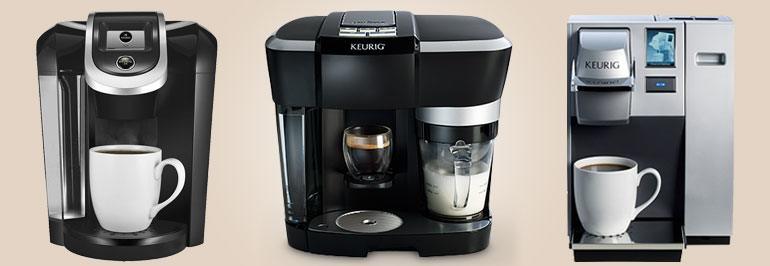
Here’s the current Keurig lineup, what’s worth buying, and how the brand compares to alternatives.
Keurig K-Mini and K-Mini Plus (entry-level)
- Keurig K-Mini ($60-70) – the most compact Keurig brewer. 6 oz to 12 oz cup brewing, single-cup water reservoir (you fill for each brew). Smallest counter footprint at 5 inches wide. Travels well, dorm-room friendly.
- Keurig K-Mini Plus ($80-100) – same compact form factor but with a removable water reservoir and a brew-strength selector. The $20 upgrade is worth it for almost anyone who’ll use the machine daily.
The K-Mini Plus is the right pick for most single-person or dorm-room single-serve situations. See our dorm room coffee makers guide for the full context.
Keurig K-Classic, K-Select, K-Duo (mid-tier)
- Keurig K-Classic ($100) – the standard mid-tier Keurig. 48 oz removable water reservoir (about 6 brews), 4 cup sizes (6, 8, 10, 12 oz). The “I want a Keurig but not the cheapest one” default.
- Keurig K-Select ($130) – adds a strong-brew button for fuller-body cups, larger 52 oz reservoir, quieter pump.
- Keurig K-Duo ($170) – combo brewer that does single K-Cups AND a 12-cup carafe (drip from ground coffee). For households where one person wants K-Cup convenience and another wants a pot of drip coffee.
The K-Duo is genuinely useful for households with mixed coffee preferences. It costs more than a K-Classic + dedicated drip coffee maker would, but the single-device convenience is worth the premium for the right kitchen.
Keurig K-Elite and K-Supreme (premium)
- Keurig K-Elite ($170) – premium Keurig with strong-brew, iced setting, temperature control, and stainless steel finish. Some Keurig enthusiasts argue the K-Elite is the sweet spot of features-vs-price in the lineup.
- Keurig K-Supreme Plus ($200) – adds Bluetooth app control and pre-infusion (briefly wets the coffee grounds before main brew, for better extraction).
- Keurig K-Cafe ($200) – adds a built-in milk frother for making lattes and cappuccinos with K-Cup espresso pods. Approximate latte quality, not real espresso.
The K-Elite is what I’d recommend if you’re committed to the Keurig ecosystem and want a brewer that will serve you well for 5+ years. The pre-infusion on the K-Supreme is a nice touch but doesn’t dramatically improve cup quality. The K-Cafe’s espresso function is best skipped – buy a real espresso machine if espresso matters.
Keurig commercial brewers
The Keurig K150 and K3500 are commercial-grade brewers designed for office break rooms. They have larger water reservoirs (90+ oz), faster brew times, and warranty support for commercial use. Costs $400-700. For a small-to-medium office, the K3500 is the standard pick.
The K-Cup ecosystem
Keurig’s biggest competitive moat is the K-Cup ecosystem itself. Hundreds of brands sell K-Cup compatible pods:
- Mainstream brands: Starbucks, Dunkin’, Green Mountain (Keurig-owned), Peet’s, Caribou, Tim Hortons, Folgers, Maxwell House
- Specialty brands: Death Wish Coffee, Stone Street, Lavazza, Illy
- Tea brands: Twinings, Bigelow, Celestial Seasonings, Tazo
- Hot chocolate and other beverages: Swiss Miss, Cafe Escapes
- Store brands: Costco Kirkland, Trader Joe’s, Walmart’s Great Value
The price per K-Cup varies significantly:
- Costco bulk K-Cups: $0.40-0.50 per cup
- Standard grocery store K-Cups: $0.60-0.80 per cup
- Specialty/Starbucks K-Cups: $0.80-1.10 per cup
- Decaf and specialty teas: typically $0.70-1.00 per cup
A daily Keurig habit costs roughly $200-400 per year in K-Cups depending on which brands you buy. For comparison, daily home-brewed specialty coffee from bulk beans costs about $100-150 per year.
The K-Cup environmental issue
K-Cups are a significant source of plastic waste. Keurig sells approximately 12-14 billion K-Cups globally per year, and despite the “recyclable” 2020 redesign, real-world recycling rates remain around 30%. The plastic-aluminum-paper composite construction makes municipal recycling difficult.
For Keurig owners who care about the environmental footprint, the meaningful options are:
- Reusable K-Cup pods (Keurig My K-Cup or third-party EZ-Cup): eliminates plastic waste entirely. Use bulk ground coffee. Adds 30 seconds of cleanup per brew.
- Compostable K-Cups (Club Coffee PurPod, San Francisco Bay OneCup): plant-based pods that compost in 90 days in commercial composting facilities.
- Aluminum K-Cup alternatives from various brands: better recyclability than mixed-plastic K-Cups.
See our K-Cup alternatives guide for the full breakdown of options.
My actual recommendation
- Smallest household / dorm room: Keurig K-Mini Plus ($80). Compact, simple, gets the job done.
- Standard single-person or couple’s kitchen: Keurig K-Classic ($100) or K-Select ($130). Reliable mid-tier picks.
- Mixed-preference household: Keurig K-Duo ($170). Both K-Cups and a carafe in one machine.
- Premium pick: Keurig K-Elite ($170). The features-vs-price sweet spot.
- Office break room: Keurig K3500 Commercial ($600). Built for the daily volume.
Skip the K-Cafe’s espresso function (buy a real espresso machine if espresso matters), the K-Supreme’s Bluetooth (the app adds little practical value), and any expectation that Keurig coffee will rival specialty fresh-brewed coffee on quality (it won’t, but it doesn’t try to).
For someone who wants the best coffee per cup at home, the Keurig is the wrong tool – an AeroPress at $35 produces meaningfully better coffee for $0.20/cup. For someone who wants reliable, fast, mess-free single-cup brewing with no thought required, the Keurig is the segment leader and earns its dominant market share. Pick based on which value you actually want.
Discussion 1
If you like coffee that tastes like a plastic water bottle, by all means…get a Keurig. I’ve tried everything to get a good cup out of this machine. If you leave water in the reservoir for more than half an hour, your coffee tastes like plastic.