
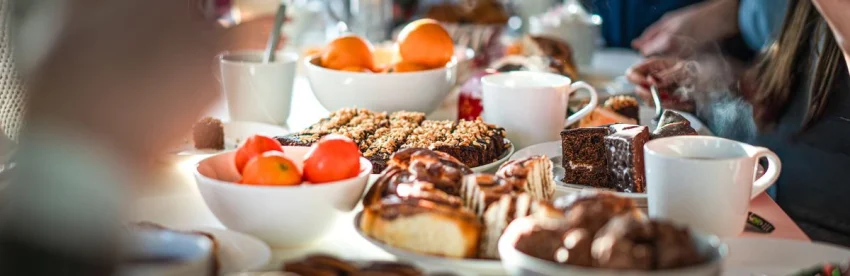
The best holiday gatherings I’ve been part of always seem to end up clustered around the coffee, long after the main meal is done and people are just talking. A real coffee bar, not just a pot sitting on the counter, gives guests a reason to linger there instead of hovering awkwardly by the door. It doesn’t need to be elaborate. It needs to be easy to use without your help, because you’ll be busy with everything else the day throws at you.
Pick a spot guests can actually get to
Put the bar somewhere accessible but out of the main traffic flow, a side table, a clear stretch of counter, anywhere that isn’t the same three square feet where everyone’s also trying to reach the appetizers. If you’re brewing for a real crowd rather than a handful of guests, an insulated dispenser or a proper coffee urn holds heat far longer than a standard pot and frees you from constantly refilling. Our coffee urn guide covers sizing by guest count if you’re brewing for more than about eight people.
What actually needs to be on the table
Beyond the coffee itself, the baseline is mugs or cups, napkins, a couple of creamers (dairy and a non-dairy option), sweeteners, and stir sticks. Group everything in a logical order, syrups and flavorings first, then milks, then toppings, then the finishing touches like cinnamon or cocoa powder, so people build their cup from base to garnish instead of hunting around the table. Keep lids, sleeves, and stirrers at the very end of the line; guests only need those after they’ve already poured, and putting them first just creates a bottleneck.
Don’t forget a decaf pot
This is the detail that gets skipped most often and causes the most quiet frustration. Someone at every gathering wants a warm drink without the caffeine, an older relative, a pregnant guest, someone who just doesn’t want to be up until 2am. A second small pot or a clearly labeled decaf option means that person doesn’t have to ask and doesn’t have to skip the moment entirely. A kid-friendly hot cocoa option covers the same gap for the younger guests.
Label everything, clearly
A chalkboard tag, a printed card, or just painter’s tape and a marker, whatever you use, label every container. Which pot is decaf, which syrup is vanilla versus caramel, which milk is oat versus dairy. This matters more than it sounds like it should: nobody wants to ask the host mid-party whether a syrup is the vanilla or the hazelnut, and unlabeled containers are exactly what causes the bar to become a bottleneck with people picking things up, sniffing, and putting them back.
The small touches that make it feel intentional
A simmer pot nearby, just water with orange peel, cinnamon sticks, and a sprig of rosemary, fills the room with a genuinely seasonal smell without any extra cooking. Keep the bar’s base neutral, cream, wood, glass, and let the actual color come from the mugs, a ribbon, or toppings like crushed peppermint or dried cranberries. It reads as considered rather than trying too hard, and it means the setup works for more than one holiday if you reuse it.
Brewing ahead without sacrificing flavor
Coffee brewed hours in advance and kept on a warmer plate turns bitter and flat fast, the heat keeps cooking it long after it’s done extracting. If you want to genuinely prep ahead, batch-brew into an insulated carafe or urn instead of leaving it on a hot plate; the sealed, insulated environment holds temperature without continuing to degrade the coffee the way an open pot on a burner does. For a party that runs long, brewing in two or three smaller batches spaced through the event beats one giant pot made hours before the first guest arrives, the coffee people get at hour three should taste as good as what the first arrivals got.
Frequently asked questions
How many guests can one coffee bar realistically serve?
A standard drip pot comfortably serves up to about 8-10 people before you’re refilling constantly. Past that, an insulated dispenser or a real coffee urn is worth the setup, it holds heat far longer and needs far less babysitting during the party.
How much decaf should I actually brew?
A smaller pot, roughly a quarter to a third of your regular coffee volume, usually covers it unless you know your specific guest list skews toward decaf drinkers. It’s better to have a little extra than to run out and leave someone without an option.
What’s the single biggest mistake people make setting this up?
Skipping labels. An unlabeled coffee bar turns into a bottleneck of guests picking up containers, sniffing, and guessing, which defeats the whole point of a self-serve setup meant to free you up to actually enjoy the party.
Should I use real mugs or disposable cups?
For a smaller, seated gathering, real mugs feel more intentional and hold heat better. For a larger, standing party where people are moving between rooms, disposable cups with sleeves cut down on breakage and lost mugs, a genuinely practical tradeoff, not just an aesthetic one.
Discussion