
I first had a dirty chai in a tiny coffee shop in the East Village, one of those places where the menu is written on a chalkboard in handwriting only the regulars can read. I ordered a chai latte. The barista asked if I wanted it dirty. I said yes before I knew what that meant, because saying no in a place like that feels like admitting you don’t belong. What showed up was a chai latte with a shot of espresso in it. The espresso cut through the sweetness of the chai like a knife through butter. I have ordered approximately three hundred of them since.
What a dirty chai actually is
A dirty chai is a chai latte with one or two shots of espresso added to it. That’s the whole concept. Chai concentrate (which is black tea steeped with spices like cardamom, cinnamon, ginger, cloves, and black pepper) gets combined with steamed milk, same as a regular chai latte. Then a shot of espresso goes in. The result is warmer, more complex, and significantly more caffeinated than either drink alone.
The “dirty” part just means espresso was added to something that doesn’t normally have it. You’ll see the same term for a “dirty matcha” (matcha latte plus espresso) or occasionally a “dirty horchata” at shops that play with the format. It’s coffee-bar slang that went mainstream.
Why the combination works so well
Chai and espresso shouldn’t work together. One is sweet and spiced, the other is bitter and roasty. But the pairing works because of what they do to each other. The espresso’s bitterness cuts the sugar in the chai, so the drink doesn’t taste as sweet. The chai’s spices, especially cardamom and cinnamon, round out the espresso’s sharper edges. And the milk ties everything together into something that tastes like neither a latte nor a chai but a third thing entirely.
In some coffee cultures, this pairing already exists in slightly different forms. In parts of India, coffee and chai have always coexisted, and some vendors in Mumbai and Kolkata make a drink that’s effectively chai brewed with coffee decoction mixed in. The American coffee shop version just formalized it with espresso and gave it a name that sounds vaguely scandalous.
The caffeine math
A regular chai latte has about 50 mg of caffeine from the black tea base. Add a single shot of espresso (roughly 63 mg), and you’re at about 113 mg total. Add a double shot and you’re at 176 mg, which is roughly equivalent to two cups of drip coffee. It’s a real caffeine delivery system, not just a flavored milk drink.
This is actually why a lot of people discover dirty chais. They like the taste of chai but want the caffeine hit of coffee. The dirty chai gives you both without tasting like you’ve just stirred a teabag into your espresso.
How to make one at home
You need three things: chai, espresso, and milk. Here’s how each piece works.
The chai base: you have three options, from easiest to best.
- Chai concentrate (store-bought, like Tazo or Oregon Chai) – the fastest route. Pour 4 oz (120 ml) into a mug. It’s pre-sweetened and pre-spiced. Convenient but often too sweet, and you’re locked into whatever spice balance the brand chose.
- Chai tea bags (like Twinings or Stash) – steep two bags in 4 oz (120 ml) of hot water for 5 minutes, then remove. Less sweet, more control, decent results.
- Homemade chai – simmer 1 cup (240 ml) of water with 3 to 4 crushed cardamom pods, a cinnamon stick, a thin slice of fresh ginger, 2 to 3 whole cloves, and a few black peppercorns. Bring to a boil, add 2 teaspoons of loose black tea (Assam works best), steep 3 to 4 minutes, strain. This version tastes dramatically better than anything from a box.
The espresso: pull a single or double shot. If you don’t have an espresso machine, a Moka pot or AeroPress makes a strong enough concentrate to work. Regular drip coffee is too dilute and will water the drink down instead of adding intensity.
The milk: steam or heat 4 to 6 oz (120 to 180 ml) of milk. Oat milk froths well and pairs nicely with the spice profile. Whole milk gives the richest texture. Almond milk works but tends to thin the drink out. Pour the steamed milk over the chai-espresso combination.
Assembly: chai base in the cup first, then the espresso shot, then steamed milk on top. Stir gently. If you’re using unsweetened chai and want a touch of sweetness, honey or a small spoon of brown sugar works better than white sugar here – the caramel notes play with the spices.
How to order one at a coffee shop
Most coffee shops know what a dirty chai is. Just ask for a “dirty chai latte.” If they look confused, say “chai latte with a shot of espresso.” Specify single or double shot, your milk preference, and hot or iced.
At Starbucks, the drink isn’t on the official menu, but every barista knows how to make it. Order a chai tea latte and add a shot (or two) of espresso. You’ll be charged for the chai latte plus the espresso shots, which puts it in the $6 to $7 range depending on size and location.
Variations and menu language
A “double dirty” chai has two shots of espresso. A “filthy” chai, at shops that use that term, usually means three. The naming is playful and inconsistent from one cafe to the next, so always ask what their version means if you see one of these on a menu.
Some shops offer a “dirty vanilla chai” where vanilla syrup replaces the plain simple syrup, which works surprisingly well since vanilla rounds out the espresso’s roast notes. Others make a turmeric dirty chai, adding a turmeric-ginger paste to the spice base before the espresso goes in. That one is polarizing. The turmeric’s earthy bitterness either complements the espresso or fights it, and there’s no way to predict which camp you’ll land in except to try it.
If a shop offers “Oregon chai” or “chai from a box,” that’s the concentrate route – sweeter, more uniform, less interesting. Shops that brew their own chai from whole spices produce a noticeably better dirty chai because the spice complexity is higher and the sweetness is controlled. It’s worth asking.
The iced version
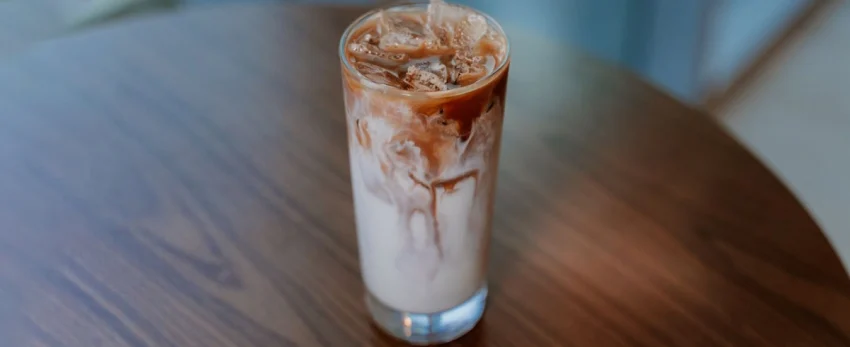
An iced dirty chai is the same drink built cold. Chai concentrate or cooled brewed chai over ice, cold milk, espresso poured over the top. The espresso creates that layered look where the dark shot sinks through the lighter chai-milk base. Some shops shake the whole thing for a more integrated flavor. Both approaches work. The iced version is a genuinely excellent summer drink and, in my honest opinion, even better than the hot one.
Frequently asked questions
What is a dirty chai?
A dirty chai is a chai latte with one or two shots of espresso added. The espresso adds caffeine and a bitter, roasty flavor that cuts through the chai’s sweetness. The term “dirty” just means espresso was added to a drink that doesn’t normally contain it.
How much caffeine is in a dirty chai?
About 113 mg with a single espresso shot (50 mg from the chai’s black tea plus 63 mg from the espresso). A double-shot dirty chai has around 176 mg, roughly equivalent to two cups of drip coffee.
Can you order a dirty chai at Starbucks?
Yes. Order a chai tea latte and ask to add one or two shots of espresso. It’s not on the official menu, but every barista knows how to make it. You’ll be charged for the chai latte plus the espresso add-on.
What milk is best for a dirty chai?
Oat milk froths well and complements the spice profile. Whole milk gives the richest texture. Almond milk works but tends to thin the drink. All three are common choices at coffee shops.
Is a dirty chai the same as a chai latte with coffee?
Essentially, yes. A dirty chai specifically uses espresso, not drip coffee. The concentrated espresso integrates with the chai without diluting it, which regular coffee would do. The distinction matters for both flavor and texture.
Discussion