
This article is for general information only and does not replace medical advice. If you are persistently exhausted during the day despite sleeping normally at night, that is worth raising with your doctor rather than managing with caffeine.
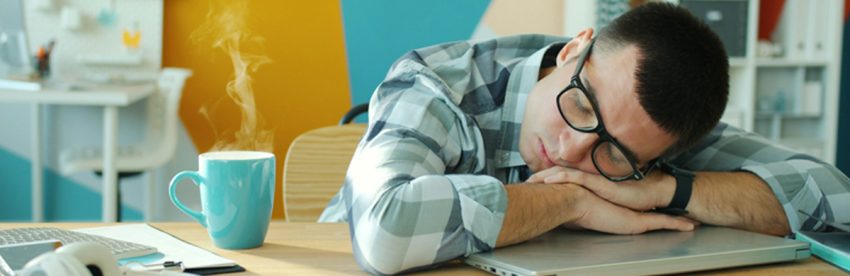
Drinking coffee and then immediately lying down sounds like the two things cancelling each other out. It is not. The timing works because caffeine takes about twenty minutes to reach you, and twenty minutes is roughly the length of a good short nap. Do both at once and you wake up as the caffeine arrives, which is a better outcome than either on its own.
Why the timing works
The mechanism comes down to a molecule called adenosine. It builds up in your brain the entire time you are awake, and the more of it accumulates, the sleepier you feel. Sleep is how your brain clears it, which is why you wake up feeling reset.
Caffeine does not give you energy. It works by blocking the receptors adenosine would otherwise dock into, so the tiredness signal never lands. The catch is that caffeine and adenosine compete for the same receptors. Late in the day, when adenosine has been piling up for eight or ten hours, caffeine has to fight for space.
A short nap clears some of that accumulated adenosine. So if you drink coffee, nap for twenty minutes, and wake as the caffeine takes effect, the caffeine meets a brain with fewer adenosine molecules in the way. Same dose, less competition.
What the research actually shows
Worth being precise here, because the coffee nap gets described with more confidence than the evidence supports.
The strongest related research tests caffeine and naps as separate countermeasures rather than combined. A randomised study published in Sleep put 24 drivers, half aged 20 to 25 and half aged 40 to 50, through night-time highway driving after either 200 mg of caffeine, a 30-minute nap, or a decaffeinated placebo. Both interventions cut inappropriate line crossings substantially. Coffee reduced the risk by 75 percent in younger drivers and 90 percent in the middle-aged group. The nap reduced it by 67 percent in younger drivers but only 20 percent in the middle-aged group, because the older participants got less deep sleep in the same half hour.
That is a useful finding in its own right: caffeine worked consistently across ages, napping did not. If you are over about 40 and a nap alone has never done much for you, that is a documented pattern rather than a personal failing.
A Cochrane review on caffeine for preventing errors in shift workers found caffeine reduced errors compared with no intervention, and in one trial performed better than napping. The honest summary is that both work, caffeine is the more reliable of the two, and combining them is a sensible extension of that rather than a separately proven miracle.
How to actually do it
- Drink the coffee fast. Two or three minutes, not fifteen. If you sip it slowly the caffeine starts arriving before you have fallen asleep, which defeats the point. Cold brew or an iced coffee is genuinely easier to drink quickly than something scalding.
- One normal cup is enough. Roughly 100 to 200 mg of caffeine. You are timing the effect, not maximising the dose.
- Set an alarm for 20 minutes. This is the part people get wrong. Twenty minutes keeps you in light sleep. Go past about 30 and you risk dropping into deep sleep, and being woken from that produces sleep inertia, the groggy, worse-than-before feeling that gives naps a bad name.
- Lie down somewhere dim and quiet. Not sleeping is fine. Resting with your eyes closed still clears some adenosine, and plenty of people never fully drop off in twenty minutes anyway.
- Get up when the alarm goes. No second alarm.
When it helps, and when it does not
The coffee nap earns its keep in the early afternoon slump, before a long drive, on a night shift, or partway through a day that started badly. It is a tool for a specific hole in the day.
It is not a substitute for sleeping properly. If you need one every afternoon, the problem is upstream, and caffeine is masking it rather than fixing it. Chronic daytime sleepiness despite adequate time in bed can point to sleep apnoea, an underlying condition, or medication effects, all of which are worth a conversation with your doctor.
Timing matters too. Caffeine has a half-life of roughly five hours in most healthy adults, meaning half of it is still circulating five hours later. A coffee nap at two in the afternoon is fine for most people. The same at six in the evening will follow you to bed. If you are sensitive to caffeine, our guide on the best time of day to drink coffee goes into the timing in more detail.
When to talk to a doctor
See your healthcare provider if you are sleepy during the day despite getting seven to nine hours of sleep, if you fall asleep unintentionally during normal activities, if you snore heavily or have been told you stop breathing in your sleep, or if you need increasing amounts of caffeine simply to function. Caffeine can also worsen anxiety, reflux, and some heart-rhythm conditions, so check before making it a daily strategy if any of those apply to you.
Frequently asked questions
Do coffee naps actually work?
The mechanism is sound and both components have research behind them individually. Caffeine reliably improves alertness, and short naps clear some of the adenosine that makes you sleepy. Combining them times the caffeine’s arrival with your waking. Studies testing the two separately are stronger than studies of the combination, so treat it as well-reasoned rather than definitively proven.
How long should a coffee nap be?
Twenty minutes, and no more than about 30. Beyond that you risk entering deep sleep, and waking from deep sleep produces grogginess that outweighs the benefit. Set an alarm rather than trusting yourself to wake up.
What if I cannot fall asleep in 20 minutes?
It still helps. Lying quietly with your eyes closed in a dim room reduces sensory load and clears some adenosine even without full sleep. Many people who use coffee naps regularly rarely fall properly asleep.
What kind of coffee is best for a coffee nap?
Whatever you can drink quickly. Cold brew, iced coffee, or an espresso all work better than a large hot mug you have to sip for ten minutes. The dose matters less than the speed.
Is it bad to do this every day?
Occasionally is fine for most healthy adults. Every day suggests you are not getting enough sleep at night, and that is worth addressing directly. Keep total daily caffeine within the 400 mg that health authorities consider safe for most adults, and watch the clock so an afternoon coffee nap does not undermine the night’s sleep.
Sources
- Sagaspe P et al. “Aging and nocturnal driving: better with coffee or a nap? A randomized study.” Sleep, 2007.
- Ker K et al. “Caffeine for the prevention of injuries and errors in shift workers.” Cochrane Database of Systematic Reviews.
This article is for general information only and does not replace personalized medical advice. Persistent daytime sleepiness should be discussed with your healthcare provider rather than managed with caffeine alone.
Discussion