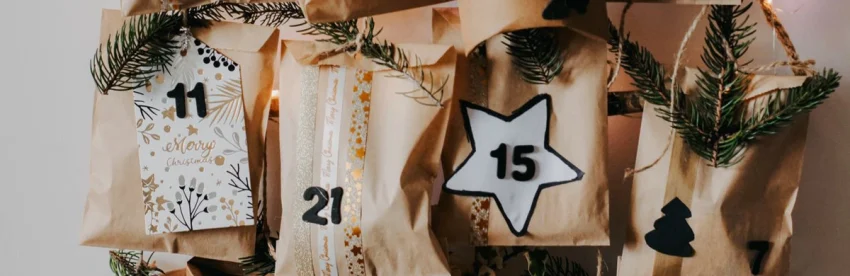
Coffee advent calendars have gone from a novelty gift-shop item to a real category with actual specialty roasters competing for your money, and the range now runs from a $22 Keurig variety box to a $190 whole-bean set with a custom deck of playing cards thrown in. Before you buy one for yourself or someone else, it’s worth understanding what you’re actually paying for at each price point, because the honest answer is that some of these are a genuinely good deal and some are just a countdown calendar with a coffee-shaped markup.
What you’re actually paying for
Strip away the packaging and a coffee advent calendar is really just a pre-portioned sampler, 24 small servings meant to be opened one a day through December. The value proposition depends entirely on whether those 24 servings are coffee you’d genuinely want to drink or filler you’re paying a premium to unbox. At the high end, reviewers of Onyx Coffee’s roughly $190 calendar have done the math and landed around $2.63 per cup once you account for real brewing volume, openly higher than a standard coffee subscription per cup. Their own verdict called it “a luxury, splash-out product for most people,” worth it for the quality and the ritual, not a smart way to stock your daily coffee.
The budget and convenience end
If you’re buying for someone with a Keurig already on the counter, the Keurig Advent Calendar Variety Pack runs about $22 for 24 K-Cup pods mixing coffee, cocoa, and latte flavors, by far the cheapest entry point and the easiest one to actually use since it requires zero equipment beyond what’s already sitting there. Door County Coffee’s 12 Days calendar, around $40, takes a different approach: full-pot bags of flavored ground coffee rather than single-serve pods, better suited to someone who brews a full pot rather than one cup at a time. The Rise coffee calendar has stayed a repeat pick in this range too, ground coffee from 24 different origins with enough in each packet for a couple of smaller cups, and notably it’s one of the few calendars that held its price this year instead of creeping up.
The specialty end: whole bean, real origin stories
Once you get past the grocery-store tier, the specialty roasters are doing something genuinely different: sourcing whole bean coffee from small, often single-farm producers rather than just repackaging a house blend 24 ways. The Roasters Pack’s flagship calendar runs about $119.95 for 26 different coffees from 26 small-batch roasters, sold in a light-roast-only version and a mixed-roast version depending on what you actually drink. THE BARN, a German specialty roaster, sells a calendar with 24 single-origin coffees at 50 grams each plus a tasting diary, roasted in an “omni” style meant to work for both espresso and filter brewing, useful if you don’t want to commit to one brew method for the whole month. There’s also a Nordic-focused calendar pulling 24 coffees from six small Swedish micro-roasters, a genuinely different way to taste a country’s specialty scene you’d otherwise have to order from six separate websites to sample.
Who this is actually worth it for
The budget pod and ground-coffee calendars make sense as a low-stakes stocking-stuffer or office gift, nobody’s going to feel shortchanged by a $22-40 gift that delivers a small daily coffee treat for a month. The specialty whole-bean calendars are a different purchase entirely: they’re for someone who already has a grinder and a real brewing setup and genuinely wants to taste 24 different origins they’d otherwise have to seek out one at a time. Buying a $120-190 calendar for someone who drinks drip coffee from a pod machine is a mismatch, they won’t have the equipment to actually taste what makes each coffee different, and a chunk of the price is paying for variety and rarity that needs a discerning palate and the right gear to appreciate.
How much coffee you actually get per day
This is the detail most gift buyers overlook, and it matters more than the origin story on the box. A 50-gram daily portion, the size THE BARN uses, brews out to roughly 3-4 cups depending on your ratio, plenty for a real daily coffee habit. Onyx’s 2-ounce (about 57 gram) pouches land in the same range. Smaller specialty portions, and some of the mixed-roast sampler calendars, run closer to enough for one or two cups, fine if the recipient is trying each coffee as a tasting exercise rather than their actual daily supply. Before buying, check the per-door weight against how much coffee the person actually drinks in a day, since a beautifully sourced 15-gram sample pouch is a tasting note, not breakfast.
Frequently asked questions
Are coffee advent calendars actually worth the money?
Depends entirely on the tier and the recipient. The budget pod and ground-coffee calendars are a fair value for what they are, a small daily treat. The $100-plus specialty calendars are a genuine luxury item, worth it if the person already has the grinder and brewing setup to appreciate 24 different single-origin coffees, not a smart way to just stock up on coffee.
Should I get a whole bean or pod-based calendar?
Match it to the equipment the person actually owns. A whole bean specialty calendar is wasted on someone without a grinder, and a K-Cup calendar is the wrong gift for someone who already buys from small specialty roasters.
When should I actually buy one?
Earlier than you’d think. The better specialty calendars, especially limited small-roaster ones, sell out well before December 1st since each “door” is a genuinely limited batch, not a mass-produced item that gets restocked.
Discussion