
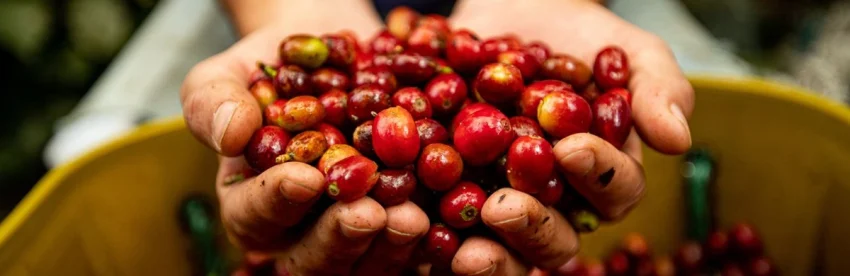
A $6 latte contains about four cents’ worth of coffee for the person who grew it. Four cents. That’s the number that sits behind International Coffee Day, and it’s the number most “celebrate with deals!” roundups conveniently skip. October 1 isn’t really about discounts on espresso machines. It’s about the 50 million smallholder farmers who grow the beans and, more often than not, lose money doing it.
So here’s what your cup actually costs from the farm to your kitchen, who gets what, and the few things you can do that genuinely move the needle.
Why October 1 exists in the first place
The International Coffee Organization established International Coffee Day in 2015 during the World Expo in Milan, and the United Nations General Assembly later formalized it in resolution 80/248. The date wasn’t picked to sell you things. It was picked to draw attention to the structural inequality in the coffee supply chain, to promote fair trade practices, and to highlight sustainability challenges that threaten the long-term future of coffee production. Seventy-seven member states backed the resolution. It’s one of the few food-related observances where the founding purpose is explicitly about the economics of the people who produce it.
The farm-to-cup cost breakdown
The global coffee industry generates over $200 billion in annual revenue. Green bean trade alone is worth $25 billion a year. But the farmers who grow it typically retain about 7 to 10 percent of the retail shelf price, and in per-cup terms, that drops to roughly 1 percent. For a $4 cup at a cafe, the grower sees about four cents.
Here’s where the rest goes, roughly, for a bag of roasted coffee you’d buy at a store:
- The farmer: 7-10% of the retail price. For a $14 bag of beans, that’s about $1 to $1.40 reaching the farm.
- Processing, milling, and export: 10-15%. The wet mill, the dry mill, the exporter’s margin, the logistics of getting green beans from a hillside in Honduras to a port.
- Shipping and import: 5-10%. Container freight, insurance, customs, warehousing at origin and destination.
- Roasting and packaging: 20-30%. This is where the biggest margin jump happens. Roasters buy green coffee for $2-5/lb (450 g) and sell roasted bags at $10-18/lb. Equipment, energy, labor, packaging, quality control, and the roaster’s own margin all stack here.
- Retail and marketing: 30-40%. Shelf space, branding, distribution, and the retailer’s cut.
If you’re already spending a grand a year on coffee, you might want to know that $70 to $100 of that is reaching a farmer. The rest goes to everyone between the farm and your cup.
The 2025-2026 price crisis, explained simply
Arabica futures hit $4.41 per pound (450 g) in February 2025, the highest in recorded history. A hailstorm in Minas Gerais, Brazil’s largest arabica-producing state, destroyed 26,600 hectares (65,700 acres) of coffee plantations the previous July. Vietnam’s robusta harvests also came in short. Global stockpiles dropped to historic lows.
But here’s the thing: record-high commodity prices don’t automatically mean farmers are doing well. Input costs, particularly fertilizers and labor, rose alongside coffee futures. Many smallholder farmers had already sold their crop forward at lower prices months before the spike, locking in rates that looked reasonable at the time. The farmers who benefited most were larger operations with the financial cushion to hold inventory and wait for peak prices. The ones growing coffee on two or three hectares (5-7 acres) often couldn’t afford to wait.
By mid-2026, arabica settled back toward $2.50-3.00/lb as Brazil’s record 66.2 million-bag harvest restored supply. The price headlines came and went. The structural problem didn’t.
Fair Trade vs Direct Trade: what each actually does
If you’ve seen “Fair Trade Certified” on a bag and wondered whether it matters, here’s the short version: it sets a floor, not a ceiling.
Fairtrade International’s minimum price for washed arabica is $1.80 per pound, plus a $0.20 social premium that goes directly to the cooperative for community projects like schools, clean water, or medical clinics. Organic-certified coffee adds another $0.30 differential. When market prices are below these minimums, the floor protects farmers from selling at a loss. When market prices are above the floor, as they were throughout most of 2024 and 2025, the certification adds little price advantage.
There’s also a transparency gap. Research from the World Development journal found that consumers pay about $1.50 extra per pound for Fair Trade-labeled coffee, but the farmer receives roughly one-sixth of that premium. The rest is absorbed by certification costs, supply chain overhead, and intermediary margins.
Direct Trade works differently. There’s no certifying body, no label, and no mandated price floor. Instead, a roaster travels to origin, builds a relationship with a specific farm or cooperative, and negotiates directly. The commitment from serious direct trade roasters, Intelligentsia being one of the more transparent examples, is to pay at least 25% above Fair Trade prices and to visit their partners at origin annually.
Direct Trade typically pays $2.00-4.00+ per pound, but it depends entirely on the roaster’s integrity. Without a third-party audit, “direct trade” on a label is a promise, not a guarantee. The best direct trade relationships pay farmers more than any certification. The worst ones are just marketing.
Five things that actually move the needle
Most “how to help” lists for International Coffee Day are either vague (“be more conscious!”) or cynical (“buy this $300 machine!”). Here’s what concretely shifts more money toward the people growing your coffee:
1. Buy from roasters who publish what they pay
Some roasters publish their FOB (free on board) prices, the price they pay for green coffee at the port of export. This is the single most useful piece of transparency in the entire supply chain. If a roaster tells you the FOB price was $3.50/lb for a coffee they’re selling at $18/lb retail, you can see the margin structure yourself. If they won’t tell you, they probably have a reason.
2. Grind your own and use what you buy well
This sounds like an equipment pitch, but hear me out. When you waste coffee through bad extraction, you’re not just losing your money, you’re devaluing the labor that produced it. A decent hand grinder and a simple pour-over dripper let you get more out of less. Better extraction means you can use fewer grams per cup, stretch a bag further, and justify buying better (often more ethically sourced) beans at a higher per-pound price without spending more overall.
3. Skip single-serve pods when you can
Capsules and pods carry the worst cost-to-farmer ratio in the entire coffee market. You’re paying $25-50 per pound equivalent, and the coffee inside is almost always commodity-grade sourced at rock-bottom prices. The packaging, the machinery licensing, and the brand markup eat most of the premium. Brewing from whole beans, even with a basic setup, sends more of your dollar toward the coffee itself.
4. Learn to read the bag
A coffee bag that lists the country, region, farm or cooperative name, elevation, processing method, and roast date is a bag from a supply chain with fewer middlemen. A bag that says “100% Arabica” and nothing else is telling you almost nothing. The more specific the sourcing information, the shorter the chain between you and the farmer, and the more likely a fair price was paid. You don’t need a certification label to spot ethical sourcing. You need details.
5. Spend more per pound, buy less often
This is the simplest shift. A $20 bag of transparently sourced, single-origin coffee from a roaster who publishes FOB prices will send more to the farmer than three $7 bags of generic grocery-shelf coffee. You don’t even have to spend more total. You just redirect where the money goes. Pair it with a brewing method that gets the most out of the beans, and a single bag lasts longer than you’d think.
Gear that makes better coffee from better beans
If you’re going to redirect some of your coffee budget toward higher-quality, more ethically sourced beans, it helps to have equipment that does them justice. You don’t need much. Here are five items I’d actually recommend, and I’ve either used these myself or tested comparable models extensively.
A solid hand grinder (the single biggest upgrade). The 1Zpresso Q2S runs about $70, produces a consistent grind across pour-over and espresso ranges, and will outlast most electric grinders at twice the price. A good grinder under $200 is the single most impactful equipment upgrade you can make. It means you can buy whole-bean specialty coffee and actually extract what you’re paying for.
A pour-over dripper that keeps it simple. The Hario V60 (about $10 for the plastic version) is still the standard for a reason. No electricity, no waste beyond a paper filter, full control over your extraction. It’s the best way to taste single-origin coffee the way the roaster intended.
Fair Trade organic beans (budget pick). Cafe Don Pablo Subtle Earth Organic is a whole-bean, medium-dark Honduran coffee that’s both Fair Trade and USDA Organic, usually around $13-15/lb. It’s an easy starting point if you’ve been buying grocery-shelf blends and want to shift without a huge price jump.
Direct trade beans (premium pick). Counter Culture Coffee’s Hologram blend runs about $15-17/lb. Counter Culture publishes their annual transparency report, including FOB prices paid for each coffee they buy. You can look up exactly what the farmer received. That’s the kind of accountability that makes a premium worth paying.
A book that changes how you think about your cup. Uncommon Grounds by Mark Pendergrast covers the entire history of coffee economics from the 1600s to the modern specialty movement. It’s the kind of book where you finish a chapter and look at your morning cup a little differently. Not in a guilt-trip way. In a “now I understand what I’m holding” way.
FAQ
What is International Coffee Day?
International Coffee Day is observed on October 1 each year. It was established by the International Coffee Organization in 2015 and later formalized by the United Nations General Assembly. Its primary purpose is to raise awareness about the challenges faced by coffee farmers, promote fair trade and sustainability, and highlight coffee’s cultural and economic significance worldwide.
How much does a coffee farmer earn per cup?
Coffee farmers typically receive about 7-10% of the retail price of a bag of beans, which works out to roughly 1% of a cafe cup price. For a $4 cup of coffee at a shop, the farmer who grew the beans sees about four cents. Even when commodity prices spike, many smallholder farmers can’t benefit because they’ve already sold their crop forward at lower prices.
Is Fair Trade coffee worth buying?
Fair Trade sets a price floor ($1.80/lb for washed arabica) and a social premium ($0.20/lb for community projects), which protects farmers when market prices drop. However, when market prices are high, the floor becomes irrelevant. Research shows consumers pay about $1.50 extra per pound, but farmers receive roughly one-sixth of that premium. It’s better than no certification, but it’s not a complete solution.
Is Direct Trade better than Fair Trade?
It depends on the roaster. The best direct trade relationships pay farmers $2-4+ per pound and include annual farm visits, which significantly exceeds Fair Trade minimums. But there’s no third-party certification, so “direct trade” on a label is a promise backed only by the roaster’s integrity. Look for roasters who publish their FOB (free on board) prices and annual transparency reports.
How can I help coffee farmers as a consumer?
Buy from roasters who publish what they pay for green coffee. Choose bags with specific sourcing details (farm name, region, elevation, processing method) over generic “100% Arabica” labels. Spend more per pound on fewer, better bags rather than buying cheap coffee in bulk. Brew well so you waste less. Skip single-serve pods when possible, since they carry the worst cost-to-farmer ratio in the coffee market.
Discussion