
Affiliate disclosure: As an Amazon Associate, TalkAboutCoffee earns from qualifying purchases. Our picks are based on editorial judgment, not commission rates.
If you want better coffee and you can only change one thing, change the grinder. Not the brewer, not the beans, the grinder. A consistent grind is what lets any brewing method extract evenly, and it is the single biggest gap between what a café produces and what most people make at home. The good news is that the useful range starts well under $200, and has for years.
First rule: burr, not blade
A blade grinder is not a grinder. It is a small propeller in a cup, chopping beans into whatever sizes happen to result. You get powder and boulders in the same batch, and when you brew that, the powder over-extracts into bitterness while the boulders under-extract into sourness. Same cup, both faults, and no adjustment to your brew time or water temperature will fix it.
A burr grinder crushes beans between two abrasive surfaces set a fixed distance apart, so everything comes out roughly the same size. That consistency is the whole point. A $40 burr grinder will beat a $100 blade grinder every single morning, which makes this the rare piece of coffee advice that saves you money.
Conical or flat burrs?
You will see both at this price. Conical burrs, a cone sitting inside a ring, are more common in home grinders, run slower and cooler, and tend to be more forgiving across a wide range of settings. Flat burrs, two parallel rings, can produce a very uniform grind but are more common higher up the price ladder.
At under $200 this distinction matters less than the marketing suggests. Build quality and how well the machine holds its setting matter more than the burr geometry. Do not agonise over it.
The grinders worth buying under $200
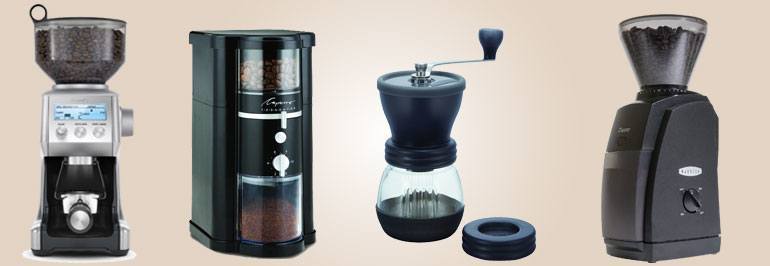
Best all-rounder: Baratza Encore
The Encore has been the default recommendation in this bracket for well over a decade, and it has earned that by being repairable. Baratza sells replacement parts and publishes repair guides, which is close to unheard of at this price. When something wears out you fix it rather than binning the machine.
Hardened steel conical burrs, 40 grind settings, and genuinely useful range from espresso-adjacent fine through to French press coarse. It is not the fastest and the hopper is modest, but for filter coffee, pour-over, and French press it does everything most people need. If you want one recommendation and no further thought, this is it.
Best value: OXO Brew Conical Burr
OXO were not in this conversation when this guide first ran, and now they are one of the best-selling grinders in the category. Stainless conical burrs, a straightforward dial, and a one-touch timer that remembers your last setting. Build quality is solid for the money and it is noticeably tidier about static than some rivals.
It is the one I would point a first-time buyer at if the Encore feels like more than they want to spend, and the gap in real-world grind quality between the two is smaller than the price difference suggests.
Best for espresso: Breville Smart Grinder Pro
If you are pulling espresso, you need finer adjustment than a filter grinder offers, and this is where the Smart Grinder Pro earns its place. Stainless conical burrs, 60 settings, a digital display, dosing by time or by number of cups, and a cradle that lets you grind straight into a portafilter.
It sits at the top of this price bracket and sometimes above it. One honest caveat that has followed this machine for years: it is stronger at the fine end than the coarse end, so if you mostly brew French press it is more grinder than you need. For espresso and moka pot it is the obvious choice here.
Best under $100: Capresso Infinity
Conical burrs at a price where most competitors are still using blades. The Infinity has been around a long time and remains a real upgrade for anyone currently chopping their beans. Settings run from very fine to quite coarse, and you can dose by timer or pulse it manually.
Two known quirks, both long-standing. It builds up static, so expect some flyaway grounds when you pull the catcher out; tapping the container before opening helps. And it is most consistent in the middle of its range rather than at the extremes. For drip and pour-over, which is where most buyers are, that is exactly where you will be anyway.
Best for travel and small budgets: a manual burr grinder
Hand grinders have improved enormously and undercut every electric option here. Ceramic or steel burrs, no cord, nothing to break, and they fit in a bag. The Hario Skerton is the long-standing name and still good, though its grind adjustment is fiddly, and there is now a large field of well-reviewed alternatives at similar money.
The trade is effort. A single cup takes a minute or so of cranking, which is fine as a ritual and tiresome if you are grinding for a full pot before work. For camping, travel, an office drawer, or a first grinder on a tight budget, it is genuinely hard to beat. Ours on brewing coffee without electricity covers where these come into their own.
What actually matters when you choose
- Grind range you will actually use. Espresso needs fine and precise. French press needs coarse and even. Very few sub-$200 grinders are excellent at both ends, so buy for how you brew now.
- Retention. Grounds trapped inside the machine mean today’s cup contains a little of yesterday’s coffee. Lower is better, and cheaper grinders are generally worse at it.
- Static. Not a performance issue, just an irritation. A tiny amount of water on the beans before grinding, sometimes called the Ross Droplet Technique, largely solves it on any machine.
- Repairability. Burrs are consumable and dull over years of use. A grinder you can buy parts for lasts a decade. One you cannot is disposable.
- Noise. Every grinder is loud. Conical burr models running at lower speeds are usually less shrill than high-speed alternatives, which matters if you brew before anyone else is up.
What to skip
- Anything described as a blade grinder or “coffee chopper”. Covered above. No price makes this a good buy.
- Grind-and-brew combo machines, if grind quality is your priority. The built-in grinders are usually mediocre and you cannot upgrade them independently.
- Very cheap “burr” grinders under about $30. Some are blade grinders with burr in the product name. Check that the listing shows an actual burr set and an adjustment dial.
If your budget stretches further, or you want the full picture across price tiers, our guide to coffee and espresso grinders covers the range above this one. And once you have the grinder sorted, our guide on getting the grind, ratio and timing right explains how to dial it in.
Frequently asked questions
Is a $200 grinder actually better than a $50 one?
Usually yes, but the jump from a blade grinder to any burr grinder is far larger than the jump from a $50 burr to a $200 one. If you are upgrading from blades, even the cheapest decent burr grinder will transform your coffee. Spending more buys consistency at the extremes, better retention, more settings, and a machine you can repair.
Can you grind espresso with a grinder under $200?
You can, but your options narrow sharply. Espresso demands fine, precise, repeatable adjustment, and most grinders in this bracket are built for filter. The Breville Smart Grinder Pro is the realistic choice here. Below about $150, expect compromises if espresso is your main method.
Conical or flat burrs, which is better?
At this price, it barely matters. Conical burrs are more common in home grinders, run cooler, and are forgiving across a range of settings. Flat burrs can be more uniform but usually appear in pricier machines. Build quality and setting stability matter more than the burr shape.
Are manual grinders as good as electric ones?
For grind quality at the same price, often better, because none of the money goes into a motor. The trade is a minute or so of cranking per cup. They are excellent for travel, one or two cups at a time, and tight budgets, and tedious for a full pot every morning.
How long does a burr grinder last?
The machine can last a decade or more. The burrs themselves are consumable and dull gradually, usually after several hundred pounds of coffee, which is years for a home user. Brands that sell replacement burrs and parts are worth paying a little extra for.
Discussion 1
Trying to decide on a grinder.