
Reader jim howard left a comment on the older version of this page pointing out a real contradiction: one article on this site said freeze your coffee, another said don’t. He wasn’t wrong to be confused. For years, “never freeze your coffee” was standard advice in the coffee world, and it turns out that advice was incomplete rather than correct. Here’s the full, current picture on buying, storing, grinding, and serving coffee, including what actually changed on the freezer question.
Buying coffee: freshness is the whole game
Green, unroasted coffee stays stable for close to a year with minimal quality loss. The moment it’s roasted, the clock starts. Roasted beans hit peak flavor somewhere between 4 hours and roughly 2 weeks after roasting, then decline gradually as the volatile aromatic compounds that make up most of what you taste and smell continue escaping into the air, roasted or not.
Practical buying rules that follow from this: buy from a roaster who tells you the actual roast date, not just a “best by” date, which on most bagged coffee is set a year or more out and tells you almost nothing useful. Buy whole bean rather than pre-ground whenever you have a grinder, since grinding multiplies the surface area exposed to air and accelerates flavor loss dramatically. And skip the bulk bins at the supermarket entirely; coffee sitting in an open bin for an unknown length of time, exposed to air and whoever’s hands were in there before yours, is close to guaranteed to be stale before you get it home.
Storing coffee: what actually degrades it
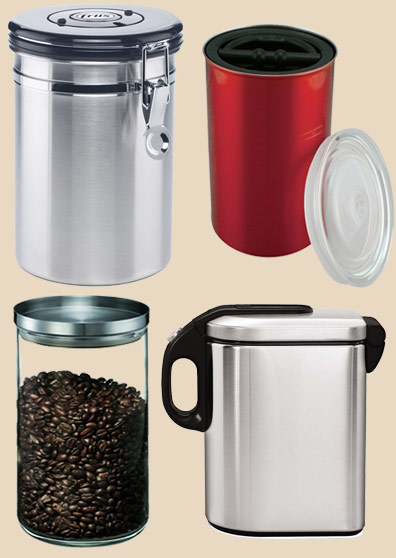
Four things ruin roasted coffee: air, heat, light, and moisture. Once beans are roasted, they continuously release the oils and aromatic compounds that carry flavor, and every one of those four factors speeds that release up. The baseline rule for any coffee you plan to use within a couple of weeks: an airtight, opaque container, kept away from your stove, oven, or any other heat source, at roughly room temperature.
The freezer question, resolved
This is where jim howard’s comment was pointing, and the honest answer is that the old “never freeze coffee” rule was based on incomplete information. Research from coffee scientist Christopher Hendon has shown that beans frozen below about -10°C (14°F, well within a standard home freezer) actually grind more uniformly, extract more consistently, and retain their aromatic compounds longer than beans left at room temperature. Separate food-science research out of Penn State found the same holds particularly true for dark roasts, where freezing measurably preserves aroma intensity that would otherwise fade.
The old advice wasn’t wrong about the risk, it was wrong about the fix. The actual danger with freezing coffee is moisture and repeated temperature cycling, not cold itself. Pull beans out of the freezer, let condensation form as they warm up, then refreeze them, and you’ve genuinely degraded the coffee. Freeze correctly and the opposite happens: the coffee lasts noticeably longer at close to its original quality.
Correct freezing, in practice:
- Split your coffee into small, single-use-ish portions before freezing, not one big bag you’ll open repeatedly.
- Use a genuinely airtight container or a vacuum-sealed bag, not a loosely closed zip-top bag.
- Take out only what you’ll use in the next day or two at a time.
- Let a portion come fully to room temperature before opening it, so condensation forms on the outside of the sealed container rather than directly on the beans.
- Once a portion is thawed, don’t refreeze it. Use it or store it at room temperature for the short remainder of its life.
If you drink through a bag of coffee within a week or two of buying it, none of this matters much, and simple airtight room-temperature storage is genuinely fine; freezing is most useful for coffee you won’t finish quickly, or beans you’re stocking up on. Ground coffee, by contrast, should generally be used within days regardless of storage method, since grinding has already released most of what freezing whole beans would have protected.
Grinding: fresh beats everything else
Grind coffee as close to brew time as you can manage, ideally right before brewing. The surface area a grinder exposes is enormous compared to a whole bean, and the aroma you smell when coffee is being ground is quite literally flavor compounds leaving the bean into the air instead of into your cup. If you buy pre-ground out of necessity, store it exactly as you would whole beans, airtight, opaque, cool, away from heat, and expect it to fade faster regardless.
How much coffee to use
Coffee-to-water ratio is one of the most personal variables in brewing, but a reasonable starting point for drip coffee is 2 tablespoons of ground coffee per 6 oz cup, adjusting up for a bolder cup or down for something milder. There’s no universally correct ratio, only the one that matches your taste, so treat any specific number, including this one, as a starting point to experiment from rather than a rule.
Keep your equipment clean
Coffee oils build up in any brewing equipment over time and turn rancid, which means a “clean” cup of fresh coffee can still taste off if it’s picking up yesterday’s residue from a dirty carafe, filter basket, or grinder. A regular rinse with hot water after each use, and a periodic deeper clean (vinegar-water descaling for machines, a dedicated cleaner for grinders), keeps equipment from quietly working against the good coffee you bought.
Serving: the cup actually matters
Much like wine, a meaningful part of coffee’s flavor is carried through aroma, and the cup you drink from affects how much of that aroma reaches your nose. Thicker-walled cups hold heat better and slow the transfer of temperature from coffee to air, which is exactly why espresso is traditionally served in small, thick-walled cups with a gentle flare at the rim: the shape channels aroma upward while the thick walls keep the shot at drinking temperature longer.
One more habit worth building: get brewed coffee off a heating element as soon as it’s done. Leaving coffee on a hot plate keeps actively cooking the oils in it, which is the single most common reason drip coffee turns bitter and stale-tasting within an hour of brewing. If you’re not drinking it immediately, a thermal carafe holds temperature without continuing to cook the coffee the way a heating element does.
Frequently asked questions
Should I freeze my coffee beans?
Yes, if you store it correctly and won’t finish it within a couple of weeks. Research shows properly frozen coffee (airtight, portioned, no repeated thaw-refreeze cycles) actually preserves flavor and aroma better than room-temperature storage over longer periods. The old “never freeze coffee” rule was based on the real risk of moisture and temperature cycling, not a problem with cold itself.
What about the refrigerator instead of the freezer?
Not recommended. A refrigerator doesn’t get cold enough to meaningfully slow flavor loss the way a freezer does, but it’s humid and full of other food odors that coffee’s porous beans will readily absorb. You get the downsides of both storage methods without the real benefit of either.
How long does roasted coffee actually stay good?
Peak flavor is roughly 4 hours to 2 weeks after roasting at room temperature, with gradual decline after that. Correctly frozen coffee extends good quality considerably longer. Ground coffee fades faster than whole beans regardless of storage method.
Why this article changed
Reader jim howard flagged a real inconsistency between this page and another one on the site regarding freezing coffee. Both were partly right and partly outdated. This rewrite resolves the contradiction directly using current research on how and why freezing actually works, rather than repeating the older blanket “don’t freeze” advice.
Discussion 2
leave it in whatever you bought it in. Make sure that it is sealed tight. If you’re like me it won’t last long enough to get stale. If you are still unsure put it in a ziplock bag. This will surely do it. No frig or freezer.
I’m confused one article says that the best place to store coffee beans is in the freezer, however this article says it’s not the best “In most cases, keeping your coffee in the freezer is not a good idea”.