
Affiliate disclosure: As an Amazon Associate, TalkAboutCoffee earns from qualifying purchases. Our picks are based on editorial judgment, not commission rates.
The Starbucks Sirena was never really a Starbucks machine. It was a Saeco, built in Italy and rebadged with a Starbucks logo back when the company still sold home espresso equipment in its stores. That one fact is the most useful thing an owner can know, because Starbucks exited the home-machine business years ago and there is no support line to call, but the Saeco underneath is a well-documented machine with parts that are still findable. If you own one, it is very likely fixable.
Availability: The Starbucks Sirena is long discontinued and Starbucks no longer sells or supports home espresso machines. Working units still turn up on the used market. For current machines, see our best budget espresso machines guide and the best cappuccino machines guide.
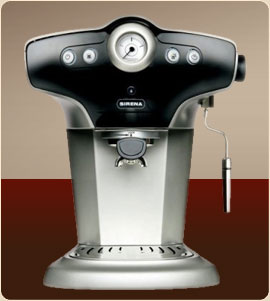
What it actually is
- 15-bar pump with a stainless steel boiler
- 57.5 oz removable water reservoir
- Dual brewing spout, so it pulls two cups at once
- Pressurized portafilter that takes both ground coffee and ESE pods
- Steam wand with a rapid steam boiler for frothing
- One-touch pre-measured single and double shots
- Removable drip tray, automatic shutoff, empty-tank indicator
Underneath the branding this is a Saeco-built consumer pump machine of its era, which is good news for reliability and for parts. It is not a prosumer machine and never was. What it does well is make a decent, consistent, low-effort espresso drink at home with almost no technique required, which is exactly what it was sold to do.
The honest verdict
The original version of this review was glowing, and it skipped the part every owner eventually runs into. So here is the fuller picture.
What is genuinely good: it is solidly built, the dual spout is legitimately convenient, the pre-measured shot buttons mean anyone in the house can use it without a lesson, and the steam wand froths milk properly rather than just blowing bubbles into it. Setup takes minutes.
What holds it back is the same thing that holds back every machine in this class: the pressurized portafilter. That is the basket with a small hole in the bottom that artificially generates crema. It makes the machine nearly impossible to fail with, which is the point, but it also caps how good a shot can get. You will get a pleasant, foamy, slightly one-dimensional espresso no matter how good your beans are. If you have tasted a shot from a machine with a proper non-pressurized basket, you will notice the ceiling. If you have not, you will probably be very happy.
The other honest note: this is a machine from the pod era. It was built to take ESE pods as much as ground coffee, and ESE pods have become much harder to find. Plan on using ground coffee.
How to use it (the short manual)
Starbucks no longer publishes the manual, and it is the thing owners search for most, so here is the working sequence.
- Fill and prime. Fill the reservoir, seat it firmly, and run a cycle of water with no coffee through the group head. After the tank has been empty the pump airlocks easily, and priming clears it.
- Let it heat properly. Wait for the ready indicator, then give it another minute. The light comes on before the group head is genuinely up to temperature, and a cold group pulls a sour shot.
- Dose and tamp. Fill the basket level and tamp firmly and evenly. With a pressurized basket you do not need to chase the perfect tamp, but an uneven one still channels.
- Lock in and pull. Twist the portafilter in tight and press the single or double button. A double should run roughly 25 to 30 seconds. Much faster means your grind is too coarse; much slower means too fine.
- Steam milk. Switch to steam and wait for it to come up to temperature, purge the wand briefly to clear condensed water, then steam with the tip just under the surface until the jug is too hot to hold comfortably. Purge and wipe the wand immediately after, every time, or dried milk will block it.
- Warm your cup. A small shot dies fast in a cold cup. Run hot water into it while the machine heats.
Common problems and fixes
- Weak, watery, or fast-running shots. Usually grind and dose. Go finer and fill the basket properly. If it was fine and got worse over time, descale before blaming anything else.
- Nothing comes out, or the pump runs loudly with no flow. An airlock or heavy scale. Prime it with a plain-water cycle, confirm the reservoir is seated, and descale if it persists. On a machine this age, scale is the single most common failure.
- Leaking around the portafilter. Almost always a hardened group-head gasket. This is a standard Saeco-type part, so measure yours and a generic replacement in the same size will usually fit. This is the most worthwhile repair on the machine.
- Steam wand blocked or weak. Dried milk. Soak the tip in hot water, clear the hole with a pin, and purge. Preventable by purging after every use.
- It runs but the espresso tastes flat or metallic. Scale again, plus old coffee. Descale with a 1:1 white vinegar and water mix or a proper descaler, then run several plain-water cycles to rinse thoroughly.
- Boiler or pump failure. This is where it ends. Parts for the branded version are scarce and a repair rarely makes economic sense against what a working used unit costs.
Descaling, the thing that keeps it alive
Espresso machines punish neglect harder than drip makers because they run hot water under pressure through narrow passages. Descale every one to two months in hard-water areas, less if your water is soft, and use filtered water in the reservoir if you can. Nearly every “it suddenly got weak” and “it stopped pumping” complaint on machines like this traces back to scale. A Sirena that gets descaled on a schedule is the kind of machine that is still working two decades on.
Is a used one worth buying?
Only cheaply, and ideally after seeing it pull a shot. The appeal is a solid Saeco-built machine with a bit of nostalgia attached, and if you find one for very little it is a fine way to make milk drinks at home. But there is no manufacturer support, the pressurized basket caps the quality, and a failed boiler ends it. Pay real money for one and you are buying the logo rather than the espresso.
If you are shopping rather than fixing, a current machine is the better buy. The DeLonghi Stilosa gets you real espresso around $100 with a warranty and available parts, and we break down the whole range in our best budget espresso machines guide. For milk drinks specifically, the best cappuccino machines guide is the more targeted list.
Frequently asked questions
Who actually made the Starbucks Sirena?
Saeco, the Italian espresso manufacturer, built it for Starbucks as a rebadged machine. That is why it handles like a Saeco consumer pump machine of that era, and why generic Saeco-type replacement parts such as group-head gaskets will often fit.
Where can I find the Starbucks Sirena manual?
Starbucks no longer publishes it, since the company left the home-machine business. The operating sequence above covers what the manual actually told you: prime the pump, wait past the ready light, dose and tamp level, pull for roughly 25 to 30 seconds, purge and wipe the steam wand after every use, and descale regularly.
Does it take pods or ground coffee?
Both. The portafilter came with a filter for ESE pods and one for ground coffee. ESE pods have become hard to find, so most remaining owners use ground coffee, which is cheaper and gives you far more control anyway.
Is the Starbucks Sirena still sold?
No. It is discontinued and Starbucks no longer sells home espresso machines at all. Working units appear on the used market, but there is no official parts or support channel, so treat any purchase as an as-is buy.
Discussion