

Affiliate disclosure: As an Amazon Associate, TalkAboutCoffee earns from qualifying purchases. Our picks are based on editorial judgment, not commission rates.
The Saeco Talea Giro Plus was a super-automatic espresso machine with a BMW DesignworksUSA shell, a ceramic burr grinder, and one knob that did everything. Bean to cup in under 30 seconds, no portafilter, no tamping. It is discontinued now, and Saeco as a brand no longer exists in the way it did: Philips bought the company and the range lives on under the Philips name. But here is the part that matters if you own one, and it is genuinely good news. Talea parts are still being made and sold. The seals, valves, and o-rings that fail on these machines are available, which means a Talea Giro sitting unused because it started leaking or stopped brewing is very likely worth restoring.
Status: The Saeco Talea Giro Plus and Giro Plus II are discontinued. Saeco was acquired by Philips, and current machines in this class are sold as Philips super-automatics. Maintenance parts for the Talea line are still widely available. For current machines see our Saeco espresso machines guide.
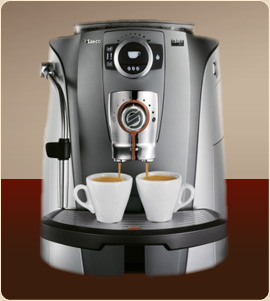
What it is
- Super-automatic: grinds, tamps, brews, and ejects the puck on its own
- Ceramic burr grinder rather than steel, with adjustable grind
- Programmable memory for water volume and coffee dose per drink
- SBS valve to adjust body from a short Italian shot to a long American coffee
- Pre-infusion cycle that wets the grounds before the main extraction
- Rapid Steam wand with a frothing tip, plus a hot water spout
- 57 oz water tank, quarter-pound bean hopper, internal dump box holding about 15 pucks
- 15 bar pump, stainless boiler, adjustable drip tray, rollers on the base
The ceramic burrs were the genuinely interesting part. Ceramic is inert, so it will not impart any flavour, and it holds an edge longer than steel. That was not marketing fluff, and it is one reason well-kept Talea grinders still grind cleanly today.
The honest verdict
When it works, it does exactly what a super-automatic should: you press a button before you are properly awake and a decent milk drink appears. The programmable memory means everyone in the house can have their own setting. Pre-infusion and the SBS valve gave it more control over the cup than most one-touch machines of its era.
The complaints were consistent, and they are worth knowing before you restore one. The grinder is loud. Not lively, genuinely loud, and people who bought it expecting a quiet morning were disappointed. The manual was poor, a thin translation that left owners guessing at the maintenance routine. And it is a fussy machine. Super-automatics have far more internal plumbing than a manual espresso machine, and every one of those seals and valves is a thing that can leak. Skip the descaling and cleaning schedule and a Talea will punish you for it faster than a simpler machine would.
That fussiness is the honest reason to think twice about buying a used one blind. It is also why so many of them are sitting in cupboards, and why the repair route below is usually the right answer.
Restoring a Talea Giro (the part nobody tells you)
A reader wrote in below, in French, saying their machine really needs a restoration. That is the common story with these, and the good news is that it is usually a cheap fix rather than a dead machine. Almost everything that goes wrong on a Talea is a rubber part that has hardened with age.
- Leaking, or water in the drip tray you did not put there. Nearly always perished o-rings and seals in the brew group or on the valves. A Saeco seal and o-ring maintenance kit covers the usual suspects and is one of the cheapest repairs in espresso. These kits are still made and fit the Talea, Odea, and related Saeco and Gaggia machines.
- Weak flow, or coffee dribbling instead of pouring. Usually the coffee spout valve or a clogged brew group rather than the pump. Talea-compatible spout and function valves are still sold as spare parts.
- Brew group stiff or jammed. Pull it out, wash it in warm water with no soap, let it dry, then lubricate the rails and o-rings with food-safe silicone grease. This alone fixes a surprising number of “broken” super-automatics.
- Descaling overdue. The machine tells you when, and it is not a suggestion. Scale in a super-automatic reaches places you cannot brush, and it is what turns a repairable machine into a scrap one.
- Grinder sounding worse than usual. Check for a stone or foreign object in the hopper before assuming the burrs are done. Ceramic burrs outlast steel and rarely need replacing.
The rule of thumb: if the boiler and pump still run, a Talea is worth restoring. If either has failed, the economics stop making sense against a current machine.
What to buy instead
If yours is beyond saving, or you want the same push-button experience with a warranty, the line continues under a different badge. Saeco was absorbed by Philips, and the current Philips super-automatic espresso machines are the direct descendants of these machines, with the same one-touch approach, ceramic burrs, and far better documentation. De’Longhi is the other major player in this class and worth comparing.
Be honest with yourself about the trade first, though. A super-automatic buys you convenience, not the best possible espresso. For the same money, a decent manual machine and a separate grinder will make a better shot, and our best budget espresso machines guide covers that route. Buy the super-automatic if what you want is a good milk drink at the push of a button, every morning, with no technique required. That is a completely reasonable thing to want.
Frequently asked questions
Is the Saeco Talea Giro still made?
No. The Talea line is discontinued, and Saeco itself was acquired by Philips, so machines in this class are now sold under the Philips name. Maintenance parts for the Talea are still manufactured and easy to find, which is why so many of these machines are still running.
Can you still get parts for a Saeco Talea Giro?
Yes, and this is the main reason to keep one. Seal and o-ring kits, brew group parts, and coffee spout and function valves for the Talea and its relatives are all still sold. Most Talea faults are perished rubber, so a cheap seal kit and an hour of work revives a lot of machines.
Why is the grinder so loud?
It always was. The ceramic burr grinder on the Talea is genuinely noisy, and it was the most common complaint when the machine was new. A sudden change in the noise is worth investigating, since it usually means something hard has found its way into the hopper, but baseline loudness is normal for this model.
Is a used Talea Giro worth buying?
Only if you can see it brew, or if the price reflects that it may need a seal kit. These are fussy machines with a lot of internal plumbing, and a neglected one can need more work than it is worth. A well-maintained one, with a service history and no descaling gaps, is a genuinely good machine and still makes a solid milk drink.
Discussion 1
je crois que la machine a besoin de vraiment avoir une restauration..