
Rancilio Silvia – the quick answer
- Still made, still current. Now in its sixth generation (Silvia V6), with roughly three decades of continuous production behind it, which is close to unheard of for a home espresso machine.
- Current price: around $700-$800 depending on finish and retailer.
- What actually changed in V6: a thermal-wrapped, lead-free brass boiler and updated internals; the core single-boiler, manual-lever design that made it famous hasn’t changed.
- Its real trade-off: single boiler means you wait between pulling a shot and steaming milk. Rancilio’s own step-up, the Silvia Pro X, adds a second boiler if that wait bothers you.
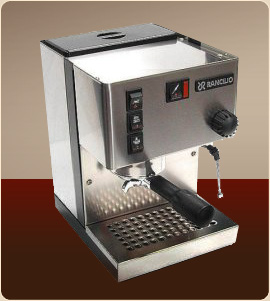
Most home espresso machines from the era this review was originally written in are long gone. The Rancilio Silvia is not one of them. It has been in continuous production for close to thirty years, which in home espresso equipment is closer to a Land Cruiser than a coffee maker: a design that earned enough trust that the company kept building it rather than replacing it.
What actually makes the Silvia different
The core of the machine is a brass boiler, brass group head, and brass lines, which hold heat and temperature far more stably than the aluminum or steel used in cheaper machines. That thermal mass is the entire reason a $700 single-boiler machine can out-perform machines costing twice as much: consistent temperature is most of what separates a good espresso shot from an inconsistent one, and brass simply holds heat better than the alternatives.
It’s a single-boiler design, which means one boiler handles both brewing and steaming, not two independently. That’s the one real limitation worth knowing before you buy: you can’t pull a shot and steam milk for a latte at the same time. In practice this means a short wait (typically under a minute) between switching from brew mode to steam mode while the boiler adjusts temperature. For a single cup at home, most owners find this a non-issue. For a household making multiple milk drinks back to back, it’s worth knowing about upfront.
What’s new in the current V6 version
The Silvia has gone through several running updates over its production life, and the current V6 generation’s headline change is a thermal-wrapped, lead-free brass boiler along with updated internal components. What has deliberately not changed is the core formula: iron frame, stainless steel panels, manual lever-style operation, and the same brew group that made the original famous. Rancilio has also expanded finish options over the years, including a newer sage green alongside the classic stainless steel.
This is worth sitting with for a second: in an industry where most manufacturers redesign a product every two or three years, Rancilio has spent three decades refining rather than replacing. That’s a real signal about how well the original design held up.
Getting the most out of it
The Silvia rewards the same things every serious home espresso machine does: a decent grinder (a burr grinder capable of a genuinely fine, consistent espresso grind matters more than the machine itself), fresh beans, and a warm-up period. Give the boiler a full 15-20 minutes to stabilize before pulling your first shot; a common beginner mistake is judging the machine on a shot pulled five minutes after power-on, before the brass has actually come up to temperature.
Because it’s a manual machine with no pressure profiling or shot-timer automation, there’s a real learning curve compared to a fully automatic machine. That’s also exactly the appeal for the audience this machine is built for: hands-on control over every variable, at a price well below machines from La Marzocco or Slayer that offer similar manual control.
Reliability, honestly
The most consistent owner complaint, then and now, is heat-up time, since a single-boiler machine with real thermal mass simply takes longer to reach temperature than a thin-walled boiler would. That’s the cost of the same thermal stability that makes the shots good once it’s warmed up; you can’t have instant heat-up and rock-solid temperature stability from the same boiler design. Beyond that, genuine mechanical complaints are rare. This is a machine coffee enthusiasts routinely keep in service for a decade or more, with the boiler gasket and group seals being the main wear items that eventually need replacement, both widely available and not particularly expensive.
Silvia, or the step-up Silvia Pro X
If you want the classic single-boiler experience at the lowest price this design comes at, the Rancilio Silvia V6 is still the pick, and still one of the best values in serious home espresso.
If the single-boiler wait between brewing and steaming is a dealbreaker for your household, Rancilio’s own Silvia Pro X adds a second boiler so you can brew and steam simultaneously, at a meaningfully higher price. It’s the same core Silvia DNA with the one real limitation engineered out.
Frequently asked questions
Is the Rancilio Silvia still being made?
Yes, and it has been in continuous production for close to thirty years. The current version is the Silvia V6, running around $700-$800.
Is the Rancilio Silvia worth it in 2026?
For anyone who wants hands-on, manual control over espresso at home and is willing to learn the process, yes. It remains one of the best values in serious home espresso equipment, largely because the core design has been refined rather than replaced for three decades.
Can the Silvia brew and steam milk at the same time?
No, it’s a single-boiler machine, so brewing and steaming happen sequentially with a short wait between them. If simultaneous brew-and-steam matters to you, Rancilio’s Silvia Pro X adds a second boiler for that specific purpose.
Is the Silvia beginner-friendly?
It has a real learning curve since it’s fully manual with no automated shot timing or pressure profiling. It rewards the effort with genuine control once you learn it, but if you want a machine you can use well on day one with no learning curve, a fully automatic espresso machine is a better starting point.
Why this article changed
The original version of this review described the Silvia’s redesign as recent news; that redesign is now multiple generations in the past, and the machine has gone through several updates since, most recently the V6’s boiler upgrade. This rewrite brings the model information current and adds the practical detail (warm-up time, single-boiler trade-off, the Pro X alternative) that the original never covered.
Discussion