
Coffee has been a social and political lubricant for about as long as people have been drinking it. Coffeehouses were the gathering places of the politically connected and the intellectually restless long before that was a trendy thing to say about a cafe. In Vienna, coffee culture was popular enough to inspire Bach’s Coffee Cantata. In the Ottoman Empire, coffeehouses were among the only places men could gather socially outside the home. Oxford’s first coffeehouse opened in 1650, and within fifty years London alone had more than 2,000 of them.
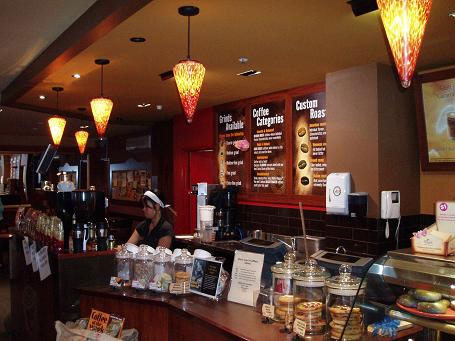
The original “penny universities”
London’s coffeehouses earned the nickname Penny Universities, since the price of a cup bought you admission to hours of real discourse on culture, art, and politics, regardless of your actual social standing. That’s remarkably close to what a good local coffeehouse still offers today: a room full of students, professors, artists, and regulars who’d otherwise never cross paths, all sharing tables because the coffee shop is one of the only places left that expects them to.
There’s actually a name for what makes it work
Sociologist Ray Oldenburg gave this phenomenon a name in his 1989 book The Great Good Place: the “third place,” somewhere that’s neither home nor work, where people gather for the pleasure of company rather than any specific transaction. Coffeehouses are one of his central examples, alongside bars, barbershops, and corner stores. A genuine third place has a few real characteristics: it’s neutral ground where nobody’s hosting, conversation is the main activity, regulars set the tone, and the atmosphere is unpretentious enough that anyone actually feels welcome to linger. That’s the actual mechanism behind the “vibe” a good coffeehouse has that a shinier chain location usually doesn’t.
How to actually spot a genuine third-place coffeehouse
Not every independent cafe pulls this off, and not every chain location fails at it entirely, but there are real, consistent signals worth checking for.
The decor is mismatched, not curated
A real neighborhood coffeehouse has a shabby-chic quality that can’t be manufactured: castoff armchairs that don’t match, shelves of secondhand paperbacks, maybe a checkers board or a deck of cards worn soft at the corners. If anything in the place looks genuinely new, it’s the espresso equipment, not the furniture.
There’s a real bulletin board
Near the door or a main wall, covered in hand-lettered flyers for local bands, roommate wanted ads, and community announcements nobody’s paying to post. A bulletin board that’s actually being used, not a sanitized corkboard with three professionally printed flyers, is a genuine sign of community traffic.
The walls double as a gallery
Local art with little index cards listing the piece, the artist’s contact info, and a price is a strong signal. In a real neighborhood spot, the barista on duty can often call the artist directly if something catches your eye.
The staff look like themselves, not a uniform
No matching polos, no corporate dress code. The menu is usually hand-chalked above the counter specifically because it changes as often as the featured beans do, not because chalk is aesthetic.
The smell is unmistakable
A place brewing a genuine rotating selection of origins smells different from a shop serving one or two house blends on repeat. It’s a real, if hard-to-describe, tell once you’ve noticed the difference.
What actually threatens the third place today
It isn’t chain coffee shops anymore, most neighborhoods have made peace with those existing alongside the local favorite. The bigger tension is the laptop. A coffeehouse full of people wearing headphones, heads down over remote work, is using the space as a second office rather than a third place, and that shift genuinely changes the room’s energy even when every other detail, the art, the mismatched furniture, the chalkboard menu, stays exactly the same. Some of the best neighborhood coffeehouses have started setting explicit boundaries around this, no-laptop tables, WiFi that cuts off after a couple hours, or just a house culture that makes it socially obvious when you’re meant to be talking to your neighbor instead of your screen. It’s a real tension between paying the bills with all-day laptop customers and preserving the actual conversation-first atmosphere that made the place worth visiting in the first place.
If you want to actually become part of it
Order your coffee and ask the barista to surprise you with their own favorite; you’ll usually get real enthusiasm along with the drink. Listen to the conversation happening around you, and don’t be afraid to interject when it’s genuinely relevant. A real neighborhood coffeehouse tends to absorb newcomers into its ongoing conversation rather than leaving them to sit in silence, which is exactly the third-place magic this whole piece is actually about, dressed up as a checklist.
Frequently asked questions
Can a chain coffee shop ever actually be a third place?
Occasionally, yes, especially a single long-running chain location with a genuinely consistent staff and regular crowd. It’s rarer, since corporate design and staffing turnover both work against the specific, unplanned character a third place needs, but the concept is about how a space actually functions, not strictly about ownership.
Why does it matter that this has an actual sociological name?
Because it turns something that feels like vague coziness into a describable, comparable set of traits, which makes it genuinely easier to notice when a place has it and when it’s just imitating the aesthetic without the substance.
Discussion 1
Coffee makes the world a much better place, its the beverage of the living. It can be enjoyed in almost every environment, whether on the beach, on a long journey, at home to feel relaxed winter or summer, but winter seems to be the best time for coffee, its lovely to enjoy it with your lover, there is just no place where coffee cannot be enjoyed. Ok I better get up and make myself a cup of coffee now, the terrible craving has just begun. Have a nice time with your cup of coffee.