Here is the number that changes how you should think about buying Jamaica Blue Mountain coffee: for every pound of the real thing, the Jamaica coffee authorities estimate roughly fifty pounds of fake “Blue Mountain” gets sold around the world. Before we get to what makes this coffee genuinely special, you need to know that, because it changes where and how you should actually buy it.
What Blue Mountain coffee actually is
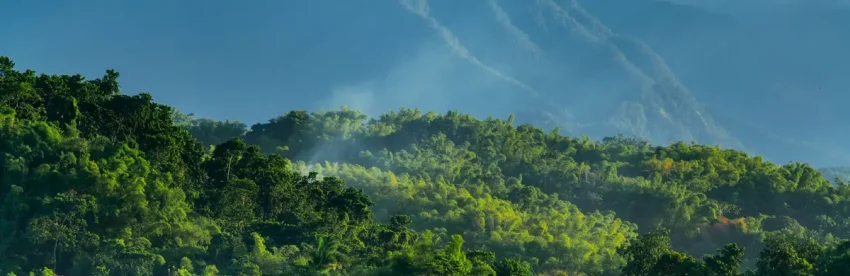
Real Jamaica Blue Mountain coffee can only come from four parishes: Portland, Saint Andrew, Saint Mary, and Saint Thomas, and only from coffee grown between 3,000 and 5,500 feet of elevation. The mountains themselves rise higher, close to 7,500 feet, but nothing above 5,500 feet is farmed. Coffee grown lower, between 1,500 and 3,000 feet, gets labeled Jamaica High Mountain instead. Below 1,500 feet, it becomes Jamaica Lowlands or Jamaica Supreme. Same island, same coffee farming tradition, but only one narrow altitude band in one part of the country earns the name that commands the premium.
Certification is handled by the Jamaica Agricultural Commodities Regulatory Authority, formerly known as the Coffee Industry Board, and it is not a loose guideline. Beans are graded by screen size, defect count, and moisture content, and genuine bags carry a certificate number and an official seal. That level of rigor exists because the reward for cutting corners is so large.
Why it costs what it costs
Part of the price is simply geography. That narrow altitude band across four parishes is a small growing area by any coffee-producing country’s standards, so total output is limited no matter how much demand grows.
The bigger reason is Japan. Japanese importers have bought the large majority of Jamaica’s certified Blue Mountain crop for decades, historically around three quarters of total output in a typical year, and they built rigorous verification into that relationship early. That long-standing demand from a market that pays well and checks carefully is a huge part of why the coffee built its reputation, and why so little of the genuine article is left over for everyone else.
The part nobody tells you: most of what is sold under this name is not real
This is the detail that actually matters if you are about to spend real money. Jamaica’s coffee board has estimated that roughly fifty pounds of counterfeit “Blue Mountain” coffee circulate globally for every pound of the certified article, and some products marketed as a “Blue Mountain blend” contain as little as ten percent genuine beans, sometimes less.
The workaround for sellers is language. “Blend” and “style” are the two words doing the misleading. A bag can legally say “Jamaican Blue Mountain Blend” while containing almost none of the coffee the name is built on, and plenty of buyers never notice the qualifier.
Three things to actually check before you buy:
- The bag says “100% Jamaican Blue Mountain Coffee,” not “Blend,” not “Style,” not just “Jamaican.”
- There is an official blue and gold certification seal somewhere on the packaging. This is mandatory for the genuine product, not a nice-to-have.
- A certificate number is printed on the bag. If a seller cannot tell you what it corresponds to, that is your answer.
How the genuine coffee is actually graded
Certified Blue Mountain coffee is sorted into grades based mostly on bean size and defect count. Grades 1 through 3 allow a small percentage of visible defects and no black or sour beans at all. Peaberry, a naturally occurring bean where the cherry produces one rounded seed instead of the usual two flat-sided halves, gets its own separate grade and its own premium, since it is prized for a more concentrated flavor even though most coffee-growing regions treat peaberry as a minor defect and sort it out.
The lower classification, Blue Mountain Triage, is a mix of Grades 1 through 3 with a higher defect allowance, which is why it costs less while still being genuinely certified coffee from the same region.
None of that grading detail matters if the bag in front of you was never certified in the first place, which is exactly why the certificate number matters more than any tasting note a seller can offer you.
Frequently asked questions
How can you tell if Jamaica Blue Mountain coffee is real?
Look for the exact phrase “100% Jamaican Blue Mountain Coffee,” an official blue and gold certification seal, and a printed certificate number on the packaging. Anything labeled “blend” or “style” is telling you, in the fine print, that it is not the genuine product.
Why does Japan buy so much Jamaica Blue Mountain coffee?
Japanese importers have purchased the large majority of certified output for decades, historically around three quarters of the harvest in a typical year, and built strict verification into those trade relationships early on. That long relationship is a major reason so little of the certified crop is available elsewhere.
What makes peaberry beans different?
A peaberry forms when the coffee cherry produces a single rounded bean instead of the usual two flat-sided halves, something that happens naturally in a small percentage of any harvest. Most growing regions treat it as a sorting defect. Jamaica grades it separately and sells it at a premium for its more concentrated flavor.
Is genuine Jamaica Blue Mountain coffee actually worth the price?
That depends entirely on whether what you are drinking is genuine, which is the whole point of checking the seal and certificate number before you decide. A lot of people who say Blue Mountain coffee “isn’t worth it” have only ever tasted a blend with a small fraction of real beans in it.
Discussion 2
Thank you for this great primer on Jamaican coffees in general and Jamaica Blue Mountain Coffee specifically.
Could you send me some information on the steps of growing Jamaican coffee? This is for a school project I need help on. Thanks =]