
Affiliate disclosure: As an Amazon Associate, TalkAboutCoffee earns from qualifying purchases. Our picks are based on editorial judgment, not commission rates.
Step into a Brazilian home and you will be offered a cafezinho before you have finished taking off your coat. Not asked whether you would like coffee. Offered one, already being made. The word means “little coffee”, and it arrives in a cup barely bigger than a shot glass, dark and syrupy and sweetened before it ever reaches you. Refusing it is possible but faintly rude, like declining a handshake.
Long before anyone in the United States talked about coffee culture, Brazil had the botequim, the corner bar where strong sweet coffee was poured into tiny cups from morning until night. Offices serve cafezinho. Restaurants bring it after dinner without being asked. Shopkeepers press it on customers. There is a phrase, hora de cafezinho, the coffee hour, and the joke is that in Brazil every hour qualifies.
What cafezinho actually is
Two things make it different from what most people outside Brazil call coffee. The first is strength: the ratio of coffee to water is far higher than drip, and the grind is fine, closer to espresso. The second is that the sugar goes in before the coffee does. It is dissolved into the water while it heats, so the sweetness is built into the drink rather than stirred in afterwards. That single step is what gives cafezinho its particular syrupy texture, and it is the part people most often skip when they try to make it at home.
If you are used to American drip coffee, it is genuinely an acquired taste. Small, intense, sweet. But it is not meant to be sipped over an hour at a desk. It is meant to be drunk in two mouthfuls, standing up, in the middle of a conversation.
What you need
You can make a passable cafezinho with a paper filter and a cone, and if that is what you have, do it. But the traditional method uses a coador de pano, a cloth flannel sock stretched over a metal ring with a wooden handle, and it genuinely makes a different cup. Cloth lets more of the oils through than paper does, which is part of why the result feels heavier on the tongue.
- A cloth coador. Look in any Brazilian or Latin American grocery, where it will cost a couple of dollars, or find a cloth coffee filter online. This is the one piece worth seeking out.
- Small cups. Proper cafezinho cups are tiny. Espresso cups substitute perfectly well.
- A small saucepan, ideally not aluminium.
- Finely ground coffee. An espresso grind is right. Brazilian brands run to a dark, low-acid roast, and a Brazilian coffee will get you closest to the real thing.
How to make cafezinho
- Measure the water and sugar together. Three quarters of a cup of cold water per cafezinho, with about a teaspoon of sugar each. Adjust the sugar to taste, but do not leave it out; it is not a garnish here.
- Heat to just below boiling, stirring until the sugar dissolves completely. This matters. Boiling water scorches the coffee and turns the whole thing bitter, and you cannot fix it afterwards.
- Take the pan off the heat, then add the coffee. A heaping tablespoon per cup, straight into the sweetened water. Stir it well so nothing sits dry on the surface.
- Pour it through the cloth. Hold the coador over the cup and pour slowly. It takes longer than you expect.
- Do not squeeze the filter. Tempting, and wrong twice over: you will scald your fingers, and forcing water through the grounds extracts the bitterness you just avoided by not boiling it.
Serve it black, which is how it usually arrives in Brazil, though plenty of people take a little milk. Two mouthfuls, and another one an hour later.
What about a Brazilian latte?
This is the drink people ask about most now, and it is a modern cousin rather than a traditional one. A Brazilian latte takes the cafezinho idea, strong coffee and built-in sweetness, and pushes it further with condensed milk instead of sugar.
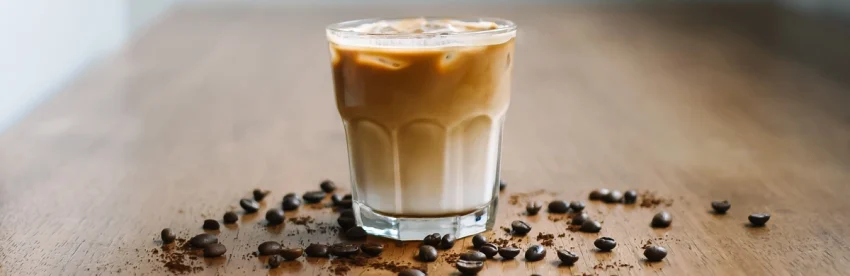
Make it by spooning a generous tablespoon or two of sweetened condensed milk into the bottom of a glass, then pouring hot, strong coffee over it. Some people stir it through immediately; the prettier version leaves it to sit so the milk stays as a pale layer at the bottom and you get the sweetness gradually as you drink down. Over ice, with the condensed milk stirred until the whole glass turns the colour of caramel, it becomes the iced version that has been everywhere in the last couple of years.
Purists will tell you this is not cafezinho, and they are right. It is its own thing, and it is very good.
Looking after the cloth filter
The coador is the one piece of equipment with a rule attached, and getting it wrong ruins your coffee. Never wash it with soap. Cloth holds detergent, and you will taste it in every cup afterwards. Rinse it thoroughly under cold running water after each use, until the water runs clear, then hang it somewhere airy to dry completely so it does not go musty. Some households keep theirs submerged in a jar of water in the fridge between uses. Replace it every couple of months, or sooner if it starts to smell.
For more on how different countries turned coffee into ritual, our guide to the coffees of the world covers the traditions that grew up around the bean, and the guide to coffee filters explains what cloth, paper, and metal each do to the cup.
Frequently asked questions
What is cafezinho?
A small, strong, pre-sweetened Brazilian coffee, served in a cup about the size of an espresso. The sugar is dissolved in the water before the coffee is added, which gives it a distinctive syrupy body. It is as much a gesture of hospitality as a drink; in Brazil it is offered to guests, colleagues, and customers throughout the day.
What is a Brazilian latte?
Strong coffee poured over sweetened condensed milk, hot or iced. It borrows the built-in sweetness of cafezinho but uses condensed milk instead of sugar, which gives it a caramel richness. It is a modern drink rather than a traditional Brazilian one, and it works especially well over ice.
Can you make cafezinho without a cloth filter?
Yes. A paper filter and cone will produce a perfectly drinkable cup. You lose some of the body, because cloth lets more coffee oils through than paper does, and you lose the ritual, which is a real part of the appeal. If you can find a coador, it is worth the two or three dollars.
Do you have to add sugar?
Traditionally, yes, and it goes into the water before the coffee. You can make it unsweetened, but you will have a small cup of very strong black coffee rather than cafezinho, which is defined partly by that sweetness. Start with a teaspoon per cup and adjust from there.
Discussion 1
This is one of the best coffee in the world,value
worth for money
Thank You