
Grinding is the most underrated step in making coffee. People will spend hundreds on a machine and then feed it pre-ground coffee or beans chopped by a cheap blade grinder, which is a bit like buying a sports car and running it on the wrong fuel. The grind controls how fast water pulls flavor out of the coffee, and getting it right, or wrong, changes your cup more than almost anything else you can do at home. Here is what actually matters: the type of grinder you use, and matching the grind size to how you brew.
Burr versus blade: the only grinder choice that matters
There are two ways to grind coffee, and they are not close in quality.
A blade grinder is the cheap kind with a little spinning propeller, the same gadget often sold as a spice grinder. It does not really grind; it chops, smashing the beans into whatever sizes happen to result, spinning at 20,000 rpm or more. You end up with a chaotic mix of fine dust and coarse boulders in the same batch, plus heat from the friction that scorches off aroma. That uneven mix is the problem: the dust over-extracts into bitterness while the boulders sit there under-extracted and sour, in the very same cup. No technique fixes it, because the grind itself is inconsistent.
A burr grinder crushes the beans between two abrasive surfaces set a fixed distance apart, so every particle comes out close to the same size. That uniformity is the whole point, and it is why even a modest burr grinder makes noticeably better coffee than the priciest blade. Burrs come in two shapes. Conical burrs are the common choice, durable and quieter, and they grind at a low speed that keeps the coffee cool and the aroma intact, which makes them flexible across everything from espresso to French press. Flat burrs spin faster and warm the grounds slightly more, but tend to produce an extremely consistent grind that filter-coffee fans prize. Either real burr grinder beats any blade. If you only upgrade one thing in your setup, upgrade to a burr grinder, and we round up the current picks in the best coffee and espresso grinders guide.
Why grind size changes the cup
Once you have even grounds, size is your main dial. The rule is simple: the finer you grind, the more surface area the water touches, so the faster and harder it extracts. Grind too fine for your brewer and the water moves too slowly through a dense bed, pulling out bitter compounds and sometimes clogging the filter. Grind too coarse and the water rushes through without grabbing enough, leaving you a weak, sour cup. Every brewing method has a sweet spot, and it is set by how long the water and coffee stay in contact and how the water moves through.
The short version: fast brewing methods need a fine grind, and slow ones need a coarse grind. Espresso pushes water through in under 30 seconds, so it needs a fine grind to slow it down; once your grinder is dialed in, our guide on how to make espresso covers the rest of the shot. A French press steeps for four minutes, so it needs a coarse grind so it does not over-extract. For a deeper walk through how each brewer dictates its grind, we have a whole guide on how brewing method determines the best grind.
The grind size chart, brew by brew
Here is the practical reference, from finest to coarsest, with a household texture to picture.
- Turkish coffee, extra-fine: finer than espresso, like flour or powdered sugar. Traditionally ground in a mill or pounded to a true powder for brewing in an ibrik.
- Espresso, fine: like fine table salt, a touch gritty between the fingers. This is the grind that gives the pump machine something to push against.
- Moka pot and AeroPress, fine to medium-fine: a little coarser than espresso. The stovetop moka pot in particular wants a fine-ish grind without going full espresso.
- Drip and pour-over, medium: like regular sand. This is the all-purpose middle ground most automatic drip machines and pour-over cones are built around.
- Chemex and percolator, medium-coarse: coarser than drip. This answers a question readers ask a lot: a percolator wants a medium-coarse to coarse grind, roughly kosher salt, because the water cycles through the grounds repeatedly, and a fine grind there turns bitter fast and sends sediment into your cup.
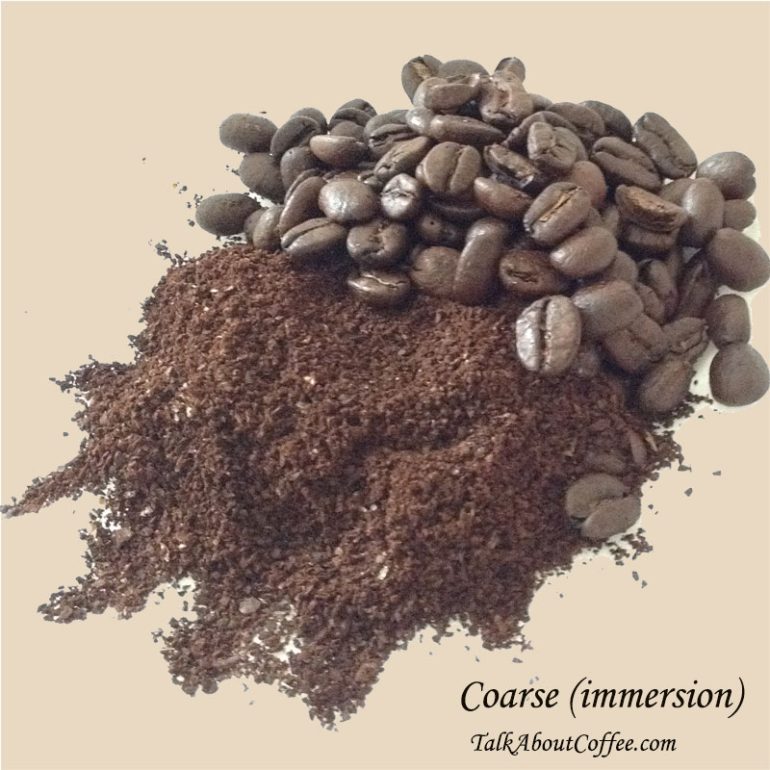
- French press and cold brew, coarse to extra-coarse: like coarse sea salt, up to cracked peppercorns for cold brew. Long steep times need big particles so the coffee does not over-extract, and a coarse grind also keeps the grit out when you press or strain.
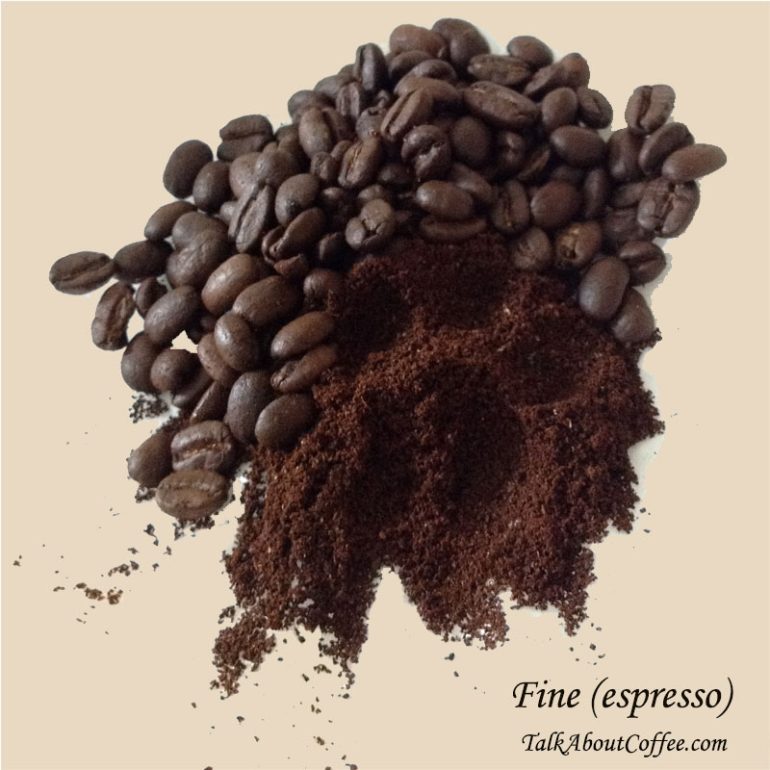
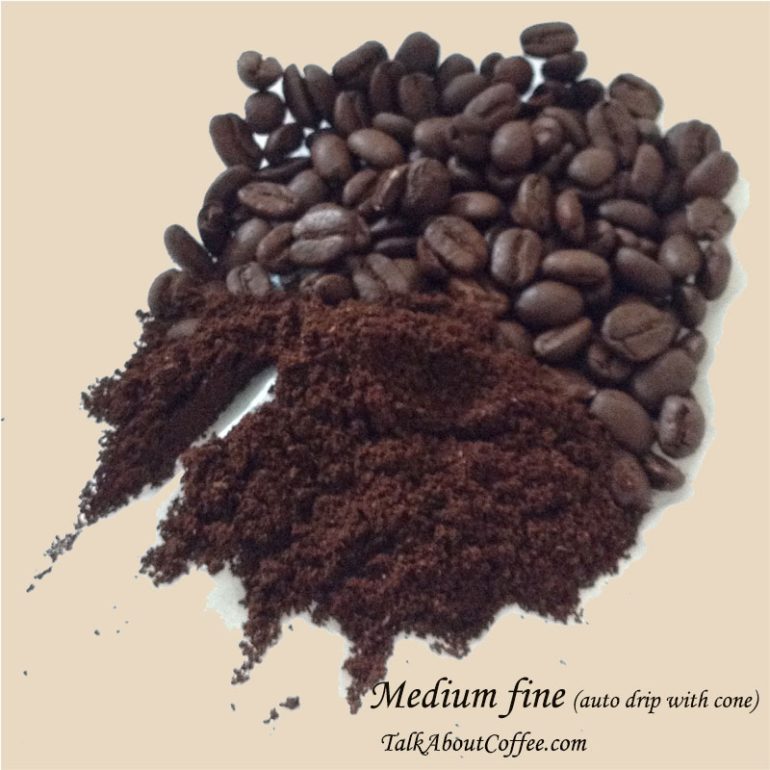
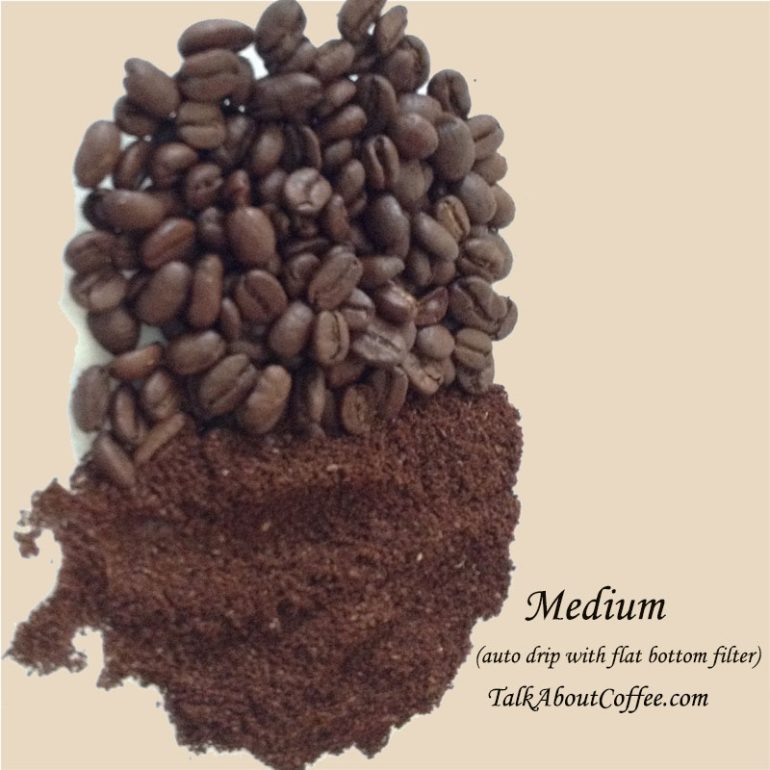
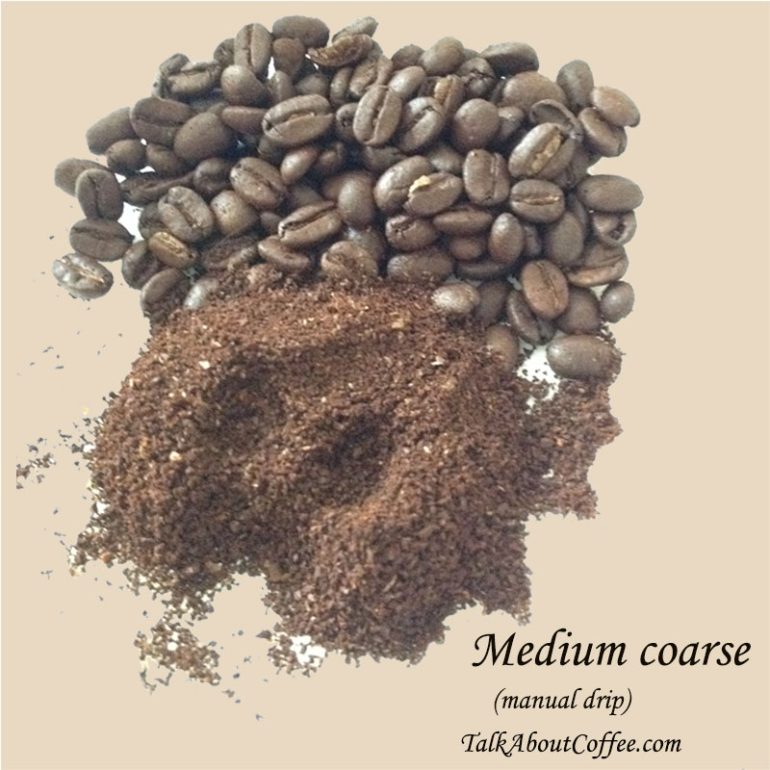
A note on pounding
There is one more old method worth mentioning. Traditional Turkish coffee grounds were historically not ground at all but pounded, beaten to a fine dust with a mortar and pestle. It is the only way to get coffee that ultra-fine by hand, and it is far too fine for any drip, press, or pump machine, where it would simply clog everything. It is a lovely bit of coffee history, and a reminder that “grind size” has been a deliberate choice for as long as people have been brewing.
Why grinding your own beats buying pre-ground
Even a perfect grind size cannot save stale coffee, and this is the strongest argument for grinding at home. The moment you grind a bean, you expose a huge amount of surface area to air, and the aromatic compounds that make coffee smell and taste like coffee start escaping almost immediately. A pre-ground bag has been losing flavor since the day it was packed, and once you open it, the decline accelerates. Whole beans, by contrast, hold their flavor for weeks because only the outer surface is exposed. Grinding right before you brew means you capture those aromatics in the cup instead of letting them drift off a shelf. It is the single biggest reason a cheap grinder and fresh beans will beat an expensive machine fed from a months-old can of pre-ground.
Getting it right at home
A few habits make the difference. Grind right before you brew, because ground coffee goes stale within minutes as the aromatics escape and within a couple of weeks it is noticeably flat. If your coffee tastes bitter and harsh, your grind is probably too fine for your brewer, so go a step coarser; if it tastes weak and sour, go finer. Change one thing at a time and taste. And keep the burrs clean, brushing out the old grounds every few weeks, because stale coffee oils go rancid and quietly drag down everything you grind afterward. If your grounds fly everywhere with static or clump in the chute, that is normal, especially in dry winter air; a tiny spritz of water on the beans before grinding, the so-called Ross Droplet Technique, tames most of it.
Frequently asked questions
What grind do I use in a percolator?
Medium-coarse to coarse, about the texture of kosher salt. Percolators cycle water through the grounds again and again, so a fine grind over-extracts into bitterness and pushes sediment into your cup. Coarser is better here than you might expect.
Is a blade grinder ever okay?
For coffee, only as a last resort, and mainly for forgiving methods like drip. It will always grind unevenly, which caps how good your coffee can get. Blade grinders are genuinely fine for spices and herbs; they are just the wrong tool for coffee. A hand-cranked burr grinder costs little more and is a real upgrade.
Can I use one grind for everything?
If you must, a medium grind is the most forgiving all-rounder and works passably for drip and pour-over. But the closer you match the grind to your specific brewer, the better every cup gets, which is the main reason an adjustable burr grinder is worth owning.
How long does ground coffee stay fresh?
Not long. Ground coffee loses its best aromatics within minutes and tastes noticeably flat within a week or two of grinding, even sealed. Whole beans hold up for several weeks past their roast date. That gap is exactly why grinding right before you brew, rather than buying pre-ground, makes such an audible difference in the cup.
Discussion 3
I do love this coffeemaker plus hot water dispenser. We actually got rid of a perfectly good KRUPS coffeemaker to buy this one. The KRUPS carafe was an absolute disappointment because it would not pour correctly. We finally decided to purchase this one because our son-in-law loves his Cuisinart bought at koolfc.silkfair.com. It is a great product and good service. Love that the hot water dispenser is included.
What kind of grind do I use in perculator, I think I used course grind before I cant remember
I can definitely say for sure that Burr ground coffee is far more superior to chopped coffee. I’ve been drinking coffee made from a small Braun coffee blade type grinder for many years, recently I upgraded to a Braun Burr type grinder and the resulting coffee is more fragrant and taste much smoother than before. Burr ground coffee is definitely the best way to enjoy your coffee.