
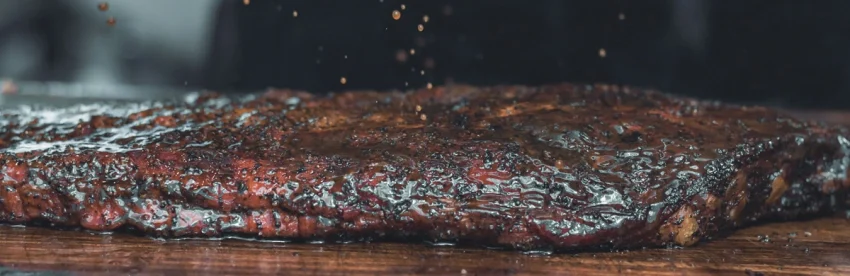
The first time someone served me a coffee-rubbed steak, I assumed it would taste like a mocha, and I was a little worried about my dinner. It did not. There was no coffee flavor in the way you would recognize it in a cup. What there was instead was a dark, smoky, almost savory crust, a little bitterness playing against the char and the fat, the kind of depth you usually only get from hours of slow cooking. That is the trick of cooking with coffee: used as a spice rather than a drink, it stops being breakfast and becomes one of the best things you can do to a piece of meat.
Coffee-crusted steaks and chops show up on some genuinely fancy menus, and they are easy to make at home. Here is how it works, why it works, and a rub you can mix in five minutes.
Why coffee works on meat
Ground coffee brings three things to a savory dish at once. It is dark and roasted, so it deepens the browned, seared flavor of the meat instead of fighting it. It is gently bitter, which balances rich fat and sweet rub ingredients the same way a splash of strong coffee balances a chocolate dessert. And it is aromatic, adding a smoky, almost earthy note that reads as “expensive” without anyone being able to name why. Think of coffee here as belonging to the same family as smoked paprika or cocoa powder, a dark, complex background flavor, not the star.
It pairs best with bold, darker meats. It is a natural on beef steaks and brisket, on pork, and especially on game like venison, elk, antelope, and buffalo, where its earthiness matches the meat. It also does lovely things to salmon and to humble cuts most people overlook, like chicken thighs, which is the cheapest possible way to find out whether you like the idea before you put it on an expensive steak.
A basic coffee rub
This is a balanced, all-purpose dry rub that works on beef, pork, and poultry. It makes enough for two or three good-sized steaks.
- 2 tablespoons finely ground dark-roast coffee
- 2 tablespoons packed brown sugar
- 1 tablespoon smoked paprika
- 1 tablespoon kosher salt (about 2 teaspoons if using fine table salt)
- 2 teaspoons coarsely ground black pepper
- 1 teaspoon garlic powder
- 1 teaspoon onion powder
- 1/2 to 1 teaspoon cayenne or chipotle powder, to taste
- Optional: 1 teaspoon unsweetened cocoa powder, which deepens it beautifully
Stir everything together in a small bowl. It is worth making a double or triple batch, because the rub keeps in a sealed jar for a couple of months, and having it on hand turns a weeknight chicken thigh into something worth eating. Pat the meat dry, then massage the rub on generously, pressing it into the surface so it sticks. The brown sugar is doing real work here beyond sweetness: it helps the rub caramelize into a proper crust over heat. That is also why you watch your temperature, which we will get to.
How to use it
A few habits separate a good coffee-crusted steak from a bitter, burnt one.
- Let it rest after rubbing. Give the meat at least half an hour with the rub on, longer for bigger cuts, so the salt and flavors work their way in. Overnight in the fridge is even better for a roast.
- Sear, then move to indirect heat. Start the meat over direct high heat to build the crust and seal in juices, then finish it over indirect heat or a cooler part of the grill. Coffee and sugar both scorch if you leave them over flame too long, and scorched is the one way this goes wrong.
- Match the grind to the goal. A finer grind dissolves into the surface and gives you more straight coffee flavor. A coarser grind stays gritty and builds more of a crunchy, peppery crust with less coffee taste. Play with it.
- Rest the meat before slicing. Pull it a few degrees early, because it keeps cooking for five to seven minutes off the heat, and let it sit before you cut so the juices settle.
Pairing the coffee to the meat
The same things that change a cup of coffee change a rub. A bold, dark roast stands up to strong partners like chipotle and garlic and to gamey meats, so reach for a dark, full-bodied origin like a Sumatran, an Ethiopian, or a Kona-style coffee on venison or brisket. Lighter, brighter coffees suit gentler dishes, where a city roast with sea salt and fresh pepper can be a quiet, elegant accent on duck or chicken. If you want to nerd out on which origin brings what, our guide to coffee bean varieties breaks down the flavor profiles you would be cooking with.
Smoking with coffee on the grill
Coffee can flavor your meat as smoke, not just as a rub. Wrap a handful of whole, lightly roasted coffee beans in a double layer of aluminum foil, poke a few holes in the top, and set the packet directly on the coals once they have reached the glowing-red stage. Lay your meat on the grate, close the lid, and the beans smolder into a fragrant coffee smoke that perfumes everything inside. One reader pointed out you can also buy coffee-based smoking pellets made for exactly this if you want it more consistent, and a few of those mixed in with your usual wood goes a long way. A little coffee smoke is plenty; too much turns acrid.
Beyond the steak
Once you stop thinking of coffee as only a drink, it turns up everywhere savory. A spoonful of strong brewed coffee or a little ground coffee deepens a pot of chili and a homemade barbecue sauce, adding that long-cooked richness in a fraction of the time. It belongs in a beef marinade. And it has a long history in baking, where it sharpens chocolate into something darker and more grown-up, which is why a shot of espresso hides in so many great brownie and cake recipes. One reader mentioned a chicken baked in coffee grounds she still remembered thirteen years later, which is exactly the kind of small, strange, delicious idea this whole approach is built on.
One shortcut worth knowing
You do not need your good single-origin beans for this. A rub or a smoke is a perfect use for cheaper coffee, and even instant coffee works surprisingly well stirred into a rub or a sauce, since you are after the roasted, bitter backbone, not subtle tasting notes. Save the expensive stuff for your cup and let the grocery-store dark roast earn its keep on the grill.
Frequently asked questions
Does coffee-rubbed meat actually taste like coffee?
Not in the way you are picturing. There is no sweet, milky, breakfast-coffee flavor. What you get is a dark, smoky, slightly bitter savoriness that reads more like a deep char or a barbecue crust than like a latte. Most people cannot identify coffee as the ingredient; they just notice the meat tastes richer.
Will the caffeine keep me up?
Almost certainly not. You are using a small amount of coffee spread across several servings, most of it sits on the surface, and much of the rub does not end up in the bite. The caffeine that survives onto your plate is a tiny fraction of a cup. If you are highly caffeine-sensitive, use a dark decaf, which works just as well in a rub since you are after the roasted flavor, not the buzz.
Can I use a coffee rub on anything besides meat?
Yes. It is excellent on hearty vegetables that take well to a grill or a hot oven, like portobello mushrooms, thick sweet-potato wedges, cauliflower steaks, and eggplant. The same dark, smoky depth that flatters a steak gives roasted vegetables a meaty, satisfying edge.
The next time you are standing over a hot grill wondering how to make a plain steak taste like it came off a restaurant menu, reach past the steak sauce and into the coffee. It is the cheapest secret ingredient in your kitchen, and it has been hiding in plain sight on your counter the whole time.
Discussion 4
wow i never heard of this before, but i think i’m going to give ti a try
Not sure about their rep on this site, but the Starbucks VIA instant coffee is great for grilling
Coffee in this foil works and if you want a pellet made especially for grilling check out mojopellets – smoking jo. You can add it directly to charcoal, or use it mixed with wood, or add it to your pellet grill. Only a few pellets are needed to creat the smoke you speak of in this article – coffee smoked meat is great!
Thank you for this! I tasted a chicken baked in coffee grounds about 13 years ago and it was so delicious!!!!!!!!!
I will try to find the perfect coffee rub as suggested and then I will let you know..
PJ