
Capresso Infinity Burr Grinder – the quick answer
- Still made, still one of the most recommended grinders under $100. Sold today as the 560 (metal housing) and 565 (lighter, plastic housing), plus a step-up “Infinity Plus” line.
- Current price: roughly $80-$110 depending on model and finish.
- Known weak point: the plastic bean hopper, which owners have reported as fragile and prone to cracking if seated or removed carelessly.
- 16 grind settings covers espresso through French press, though dialing in the exact right setting for your machine takes some trial and error since Capresso doesn’t publish a detailed setting-to-brew-method guide.
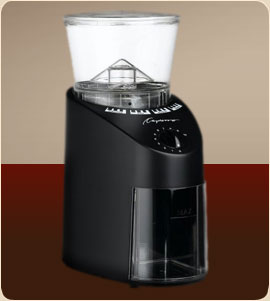
This grinder has stayed on “best burr grinder under $100” lists for close to two decades for a real reason: a genuinely good conical burr mechanism at a price point most entry-level grinders can’t match. That reputation has held up. What’s changed since the original version of this review is which model numbers are actually current, and which of its old complaints still hold.
560 or 565: which one is actually current
Capresso sells this grinder in two housings that share the same internal grinding mechanism. The 560 has a die-cast metal housing (available in polished or brushed chrome), which adds weight and a more solid feel on the counter. The 565 uses an ABS plastic housing in black, which is lighter and less expensive. Functionally, the grind quality is identical between them; the difference is entirely housing material, weight, and finish. If a metal build matters to you, get the 560. If price is the deciding factor, the 565 does the same grinding job for less.
Capresso also sells an Infinity Plus line above these, with a larger hopper capacity and some added features, if you want a step up from the base Infinity without leaving the same product family.
The plastic hopper: a real, longstanding complaint
The most consistent criticism of this grinder, across owner reviews for years, is the bean hopper: it’s made of relatively thin plastic, it’s not always obvious how it seats correctly onto the base, and forcing it in the wrong orientation is a common way owners have cracked it. This is a genuine design weak point, not an isolated bad-unit problem.
What actually helps: line up the hopper’s locking tabs with the base before pressing down, rather than twisting it into place, and never force it if it doesn’t seat smoothly on the first try. If yours does crack, replacement hoppers are sold separately through Capresso’s parts channel and third-party sellers, which is worth knowing before you assume a cracked hopper means buying a whole new grinder.
Sixteen settings, and how to actually use them
The grinder offers 16 grind settings spanning fine (espresso) through coarse (French press, cold brew), controlled by a front dial and a separate time-based auto-stop from 5 to 60 seconds. The honest limitation here, unchanged from the original version of this review, is that Capresso doesn’t publish a clear settings chart mapping specific numbers to specific brew methods, so new owners are largely left to experiment.
As a starting reference: settings toward the low end (1-4) suit espresso, the low-middle range (5-8) suits pour-over and drip machines, and the higher end (12-16) suits French press and cold brew. Start in the middle of whichever range matches your brew method and adjust from there by taste; a grind that’s too fine will taste bitter and over-extracted, too coarse will taste weak and sour.
Static buildup and how to reduce it
Static cling in the ground-coffee container, causing grounds to stick to the walls instead of falling cleanly, is a known quirk of this grinder that owners have reported consistently. It’s a byproduct of grinding dry beans in a plastic container, not specific to a bad unit. A quick fix that works: mist your beans with a tiny amount of water before grinding (a technique sometimes called the “Ross Droplet Technique” in the specialty coffee world), which measurably reduces static cling. Alternatively, a few taps on the side of the container after grinding knocks most clinging grounds loose.
Frequently asked questions
Is the Capresso Infinity grinder still sold?
Yes. It’s sold today as the 560 (metal housing) and 565 (plastic housing), plus a step-up Infinity Plus line, and it remains one of the most consistently recommended burr grinders under $100.
What’s the actual difference between the 560 and 565?
Housing material and weight only. The 560 is die-cast metal (polished or brushed chrome); the 565 is lighter ABS plastic in black. The internal grinding mechanism and grind quality are the same.
Why did my hopper crack?
This is a known weak point of the design: the plastic hopper doesn’t always seat obviously, and forcing it in at the wrong angle is a common way owners crack it. Align the locking tabs before pressing down rather than twisting it in. Replacement hoppers are available separately if yours breaks.
What setting should I use for espresso?
Start in the 1-4 range on the 16-setting dial and adjust by taste; too fine tastes bitter and over-extracted, too coarse tastes weak. Capresso doesn’t publish an exact settings chart, so expect some initial trial and error specific to your beans and machine.
Why this article changed
The original version of this page described specs and a complaint list without ever confirming whether the product was still current, or offering any actual fix for the issues it listed. This rewrite confirms current model numbers and pricing, and turns the “known complaints” section into practical fixes: how to avoid cracking the hopper, how to actually pick a grind setting, and how to cut down on static.
Discussion 2
i have one you can buy.
I am looking for a top quality coffee grinder. This looks like a well build unit. What is the cost of these units and how many days to ship it.
Thank you.