Affiliate disclosure: As an Amazon Associate, TalkAboutCoffee earns from qualifying purchases. Our picks are based on editorial judgment, not commission rates.
If you only upgrade one thing in your coffee setup this year, make it the grinder. I know that sounds backwards. The machine is the shiny part, the grinder is the boring box next to it. But I have tested enough gear over the years to tell you flatly: a great machine fed by a bad grinder makes bad coffee, and a modest machine fed by a great grinder makes good coffee. The grind is where the cup is won or lost. And with a big sale like Amazon Prime Day landing June 23-26 this year, grinders are one of the few coffee categories that actually see real discounts, so it is a good moment to stop putting this off.
The old version of this guide, years ago, recommended a handful of blade grinders. I am here to correct the record, because that was wrong then and it is wrong now.
The one rule that matters: burr, not blade
A blade grinder, the cheap spinning-propeller kind that doubles as a spice grinder, does not grind coffee. It smashes it. You get a chaotic mix of dust and boulders in the same batch, and that wrecks your extraction, because the dust over-extracts into bitterness while the boulders sit there sour and under-extracted. No amount of technique fixes it. If you own one, it is fine for spices. For coffee, it is the single biggest thing holding your cup back.
A burr grinder crushes the beans between two abrasive surfaces set a fixed distance apart, so every particle comes out roughly the same size. That uniformity is the whole game. Everything below is a burr grinder. Spend the least you can on the machine if you must, but do not cheap out here.
What actually matters when you choose
Before the picks, four things separate a grinder you will love from one you will replace. Brew method first. Espresso needs a fine, finely adjustable grind that most cheap grinders physically cannot produce; filter and French press are far more forgiving. Buying an espresso-capable grinder when you only make drip is wasting money, and buying a drip grinder for espresso will frustrate you daily. Conical versus flat burrs. Both are real burrs and both beat blades. Conical burrs are common, durable, and great for everyday filter and espresso; flat burrs, like the 64mm set in the Fellow Ode, tend to give a touch more uniformity for filter at higher cost. Stepped versus stepless adjustment. Stepped grinders click between preset settings, which is simple and perfect for filter. Stepless grinders slide smoothly between any setting, which espresso really wants because the difference between a good shot and a bad one can be a hair’s-width change. Retention and mess. Cheaper grinders trap stale grounds inside and throw static-charged coffee everywhere; it is annoying but not a dealbreaker at the budget end. Everything else, like built-in scales and timers, is a nice-to-have, not a reason to buy.
Best value, period: a good hand grinder
Here is the surprise that annoys people who spent $300 on an electric: a $70 hand grinder will out-grind most cheap electrics. The Timemore Chestnut C3 is the one I point beginners to constantly. Stainless steel burrs, genuinely even grind for pour-over and French press, and it costs less than a month of cafe lattes. The catch is the obvious one: you crank it by hand, about 30 to 75 seconds per dose depending on how fine you go. If that does not bother you, it is the best coffee value in this entire guide. The cheaper Timemore C2 is also excellent if you want to spend even less.
If you specifically want to pull espresso by hand, step up to something like the 1Zpresso J-Max, which has the fine, repeatable adjustment that espresso demands and that cheap electrics simply cannot hold.
Best entry electric for filter coffee: Baratza Encore
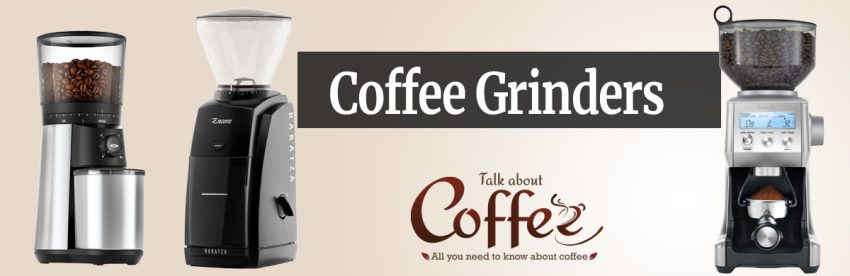
If you want to push a button and walk away, the Baratza Encore has been the default recommendation for entry-level electric grinding for over a decade, and it has earned it. Around $130 to $150, conical burrs, 40 grind settings, and the thing that really matters at this price: Baratza sells replacement parts and actually services them, so an Encore can last you ten years instead of two. It is built for drip, pour-over, and French press. It is not built for espresso, which brings us to its sibling.
Best budget espresso grinder: Baratza Encore ESP
Espresso is brutally demanding on a grinder because it needs a very fine grind that you can adjust in tiny increments. Most grinders under a few hundred dollars cannot do it. The Baratza Encore ESP, around $250, is the honest entry point. It handles espresso and still does filter well, so if you are running an espresso machine on a budget, this is the grinder that finally makes it work. Pair it with a modest machine over a fancy machine with a bad grinder every single time. I cover why grind is so make-or-break for espresso in the how to make espresso guide.
Best for pour-over clarity: Fellow Ode Gen 2
If you are a filter-coffee person who has fallen down the pour-over rabbit hole, the Fellow Ode Gen 2 is the nicest thing here for the money, around $345. It uses 64mm flat burrs, which are a step up in uniformity from conical burrs for filter coffee specifically, and it is built to disappear into a nice kitchen rather than shout at you. The trade-off is honest: it is tuned for filter and is not meant for espresso. Buy it because you make pour-over and want the cleanest cup, not because it is expensive.
Cheapest electric worth owning: OXO Brave
If a hand grinder is a dealbreaker and the Encore is over budget, the OXO Brave conical burr grinder, around $100, is the floor I would go to for an electric. It is not as refined as the Baratza and you will not pull great espresso with it, but it is a real burr grinder that makes legitimately good drip and French press coffee, and that puts it in a completely different universe from any blade grinder at a similar price.
If you want to step up
Past this point you are into enthusiast territory, and the returns get smaller and the prices get bigger. The Baratza Virtuoso+ is the Encore’s upgraded cousin with a better burr set. For espresso, single-dose grinders like the DF64 and stepless Italian machines like the Eureka Mignon Specialita are where serious home baristas land. Single-dosing means you weigh in exactly the beans you want to grind and the grinder holds almost nothing back, which gets you fresher coffee and lets you switch beans without waste, the kind of detail that matters once you are chasing a perfect shot. You do not need any of these to make excellent coffee. You need them when grinding has become a hobby rather than a step. And whatever you land on, brush the burrs out every few weeks, because old coffee oils go rancid and quietly drag down everything you grind after them.
Discontinued but still asked about: the Breville BCG450XL
People still search for the Breville BCG450XL Conical Burr Grinder, and its bigger sibling the BCG800XL Smart Grinder, so they are worth addressing directly. It was a compact conical burr grinder that ground the full range from extra fine to coarse, with a variable timer (10 to 30 seconds), a half-pound bean hopper, a stainless steel body, and anti-static technology to keep the grounds from clinging everywhere. Owners liked that it ran quiet, felt solid, and released the grounds cleanly with little retention. The common gripe was that the hopper held a bit less than advertised. For a mid-range home grinder in its day, it was a genuinely good one.
It is discontinued now. Breville replaced it with the Breville Smart Grinder Pro (BCG820BSSXL), which is the direct successor: more grind settings, a digital display, and dosing by time or by cups. If you own a BCG450XL and it still runs, keep it, since the burrs are the part that matters and they last for years with the occasional brush-out. If you are shopping, buy the Smart Grinder Pro or one of the current picks above rather than hunting a used BCG450XL, since a discontinued grinder means no parts if the motor or burr carrier ever fails.
Grabbing one on a big sale
Coffee grinders are one of the categories that genuinely drop in price during the big seasonal sales like Prime Day and Black Friday. A few honest tips so you buy well instead of just buying. Decide your brew method first, because the right grinder for espresso and the right grinder for pour-over are different machines. Do not let a flashy percentage-off talk you into a blade grinder, since a heavily discounted blade grinder is still a blade grinder. And check the actual price history rather than the sale sticker, because a real grinder rarely goes truly cheap, and anything claiming to be a great espresso grinder for $40 is not telling you the truth.
The short version of this whole guide: buy a burr grinder, match it to how you brew, and if a sale knocks a few dollars off a Timemore, a Baratza, or a Fellow, that is a genuinely good time to pull the trigger. For more on which grind size goes with which brewer, see our guide on how brewing method determines the best grind. And if you would honestly rather not own two separate machines, our grind and brew coffee maker guide covers the built-in-grinder route instead.
Discussion