
Affiliate disclosure: As an Amazon Associate, TalkAboutCoffee earns from qualifying purchases. Our picks are based on editorial judgment, not commission rates.
Here is the thing nobody tells you when you start shopping for an espresso maker: most of the machines under $200 are the worst way to spend that money. You get a thermoblock, a pressurized basket doing the work your technique should be doing, and a steam wand with all the power of a disappointed sigh.
But espresso is not a machine. It is coffee forced through a compacted bed of grounds under pressure. Nothing in that sentence requires a plug. I have pulled better shots on a $40 hand press than I have on plenty of $150 countertop machines, and I have owned enough of both to have earned that opinion the expensive way.
So these are ten espresso makers under $200, sorted by how they generate pressure rather than by brand. Four of them do not plug in at all.
What counts as espresso here
Real espresso runs around 9 bars of pressure through finely ground coffee at roughly 200 F (93 C), pulling about 2 oz (60 ml) in half a minute or less. Some of the makers below hit that properly. Some get to 1.5 or 2 bars and make something closer to very strong, syrupy coffee.
I am flagging which is which, because a moka pot is not an espresso machine and anyone who tells you otherwise is selling one. What a moka pot is, though, is a genuinely excellent way to make intense coffee for about the price of two bags of beans.
Stovetop: the cheapest real pressure you can buy
Bialetti Moka Express, around $30
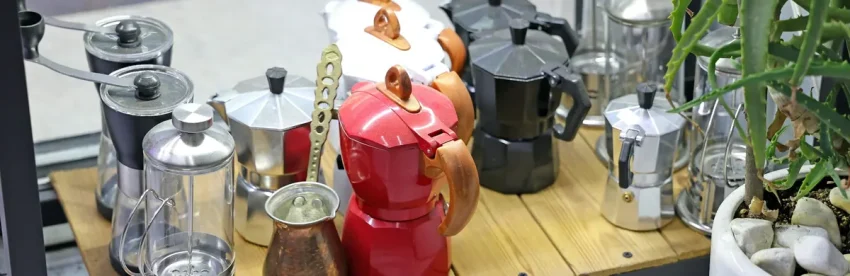
The octagonal aluminum pot your Italian friend’s grandmother has had since 1970. Steam pressure in the base pushes water up through the grounds at about 1.5 bar. That is not espresso pressure, and the Moka Express does not pretend otherwise.
What it does deliver is concentrated, heavy-bodied coffee that makes a perfectly good latte base. It is nearly unbreakable, costs less than a month of takeaway, and has no electronics to fail. Most bad moka coffee is a technique problem rather than a pot problem, which is why we wrote a full guide to brewing with a moka pot. Start with hot water. That one change fixes most of it.
Bialetti Moka Express on Amazon
Bialetti Brikka, around $50
The Brikka is the Moka Express with a weighted pressure valve on the spout. Pressure builds until the valve lifts, so the brew comes out in a burst instead of a dribble, and you get an actual layer of foam on top.
Is it crema in the espresso sense? Not quite. It is close enough that you will notice, and for twenty dollars over the standard pot it is the better buy if foam matters to you. It is fussier about grind and fill level, so read the manual for once.
Manual press and lever: where your arm is the pump
AeroPress, around $40
The AeroPress is not an espresso maker and its inventor never claimed it was. You are generating maybe 1 bar with your body weight. But it makes a concentrated shot-like brew with almost no bitterness, it is nearly impossible to get wrong, and the whole thing cleans up in about eight seconds.
It also survives being thrown in a bag, which is why mine has been to more countries than I have. If you want the longer version, we have a separate piece on the AeroPress.
Cafflano Kompresso, around $80
This one genuinely hits 9 bars, and it does it with hydraulic pressure from a hand-squeezed chamber. No electricity, no heating element, no pump. You supply hot water and effort.
The catch is volume. You are making one small shot at a time and your hand will know about it. But the crema is real crema, which puts it ahead of everything else in this price bracket that does not plug in.
Flair NEO Flex, around $120
A manual lever press, which is the same principle as the beautiful chrome machines in Italian bars, minus about $3,000 and the plumbing. You preheat the brew cylinder, load the basket, pour in hot water and pull the lever down.
The NEO Flex uses a pressure-assist basket that is forgiving about grind, which matters because lever espresso punishes a bad grinder harder than any pump machine will. It comes apart for cleaning in seconds and stores in a drawer. This is the one I would hand someone who wants to learn what pressure actually does to coffee.
Portable pumps: espresso in a bag
Wacaco Nanopresso, around $70
A hand-pumped piston that claims up to 18 bars. You pump it maybe fifteen times and it produces a legitimately good small shot with proper crema. It weighs about 12 oz (336 g) and fits in a jacket pocket.
I have used one on a train, which is a sentence I did not expect to write about espresso. The shot was better than the buffet car’s, though that bar sits on the floor.
Wacaco Picopresso, around $130
The Nanopresso’s serious sibling. It uses a naked, non-pressurized 52 mm basket, which means it will make cafe-grade espresso and it will also punish a mediocre grind without mercy. There is no forgiving basket to hide behind.
Buy this only if you already own a decent burr grinder. Paired with a bad one it is the most frustrating object in this entire article.
Staresso, around $60
Cheaper than the Wacacos and built around a clear chamber so you can watch the extraction, which is genuinely useful when you are learning. Pressure lands lower than the Nanopresso and the crema is thinner.
It doubles as a cold brew maker and milk frother, and at this price the versatility is the point. Not the best shot here. Probably the most useful single object here.
The two plug-in machines worth it under $200
Nespresso Essenza Mini, around $130
Capsules are not a moral failing. The Essenza Mini runs 19 bars, heats in under 30 seconds, and produces a consistent shot with crema every single time, because every variable that usually goes wrong has been sealed inside an aluminum pod at the factory.
You are trading control and running cost for absolute reliability. If you want coffee rather than a hobby, this is an honest answer, and it is the smallest machine here by a wide margin.
Nespresso Essenza Mini on Amazon
DeLonghi Stilosa, around $100
The cheapest plug-in machine that makes real espresso from real grounds with a real portafilter. It is plastic, the steam wand is weak, and the baskets are pressurized. It is also the only way on this list to get ground-coffee espresso plus milk steaming for a hundred dollars.
If a countertop machine is what you actually want, do not stop here. We compared it against four others in our roundup of budget espresso machines under $300, and the step up to $180 buys more than you would think.
Which one should you actually buy
If you want the best coffee per dollar and do not care about crema, the Moka Express at $30 is not a compromise, it is just a different drink and a very good one.
If you want real espresso with real crema and you own a decent grinder, the Flair NEO Flex or the Picopresso will embarrass machines costing three times as much.
If you want to press a button before you are fully awake, the Essenza Mini. No shame in it.
And if you are buying your first grinder and your first espresso maker at the same time with $200 total, spend $120 on the grinder and $40 on the AeroPress. Everyone gets this backwards, including me, for about four years.
Frequently asked questions
Is moka pot coffee really espresso?
No. A moka pot generates roughly 1.5 bar against espresso’s 9. It makes strong, concentrated coffee that works beautifully in milk drinks, but it is a different extraction and it will not produce true crema.
Can you get crema without an electric pump?
Yes. The Cafflano Kompresso, Flair NEO Flex and both Wacaco pumps all reach genuine espresso pressure using your hand. Crema comes from pressure and fresh beans, not from a wall socket. Stale coffee will not produce crema on any machine at any price.
What is the cheapest way to make espresso at home?
For something espresso-like, a $30 moka pot. For actual 9 bar espresso with crema, the Cafflano Kompresso at around $80 is the cheapest honest entry, assuming you already have a grinder that can go fine enough.
Do I need a burr grinder for these?
For the pressurized-basket options, a decent blade grinder will limp along. For the Picopresso and any naked basket, a burr grinder is not optional. Espresso needs a consistent fine grind, and a blade grinder produces gravel and dust at the same time.
Prices move constantly at this end of the market, so treat every figure above as a ballpark rather than a promise. The ranking would not change much either way. What changes the coffee is the grinder, and that has been true since long before any of these existed.
Discussion